- Free Shipping on All Orders -100% Authentic Batana Oil from Honduras

Imagine standing at the edge of an ancient rainforest in Honduras. The air is thick and warm, carrying the scent of wet earth and wild vegetation. Howler monkeys call out somewhere deep in the canopy above you. The rivers run dark and clear. And somewhere in that green wilderness, women are hand-harvesting small, russet-colored nuts that have quietly transformed hair for centuries.
That’s where batana oil comes from.
If you’ve been searching for the real origin of batana oil, you’re in the right place. This isn’t just an ingredient story — it’s a story about a people, a rainforest, and a tradition that has survived the test of time. In this article, we’ll walk you through the geography of Honduras, introduce you to La Mosquitia and the Miskito people, and explain exactly how this remarkable oil goes from a wild palm tree to your hands.
The Birthplace of Batana Oil: Honduras at a Glance
Honduras sits at the heart of Central America, bordered by Guatemala, El Salvador, Nicaragua, and the Caribbean Sea. Most people picture Honduras as a land of beaches and ruins — and yes, it has both. But the country’s interior tells a different story.
More than 60% of Honduras is covered in mountains, rivers, and dense tropical forest. The Caribbean coast stretches east into one of the most remote and biologically diverse regions in all of Central America. The climate here is hot, wet, and wild — exactly the kind of environment where tropical palms thrive without any human help.
This isn’t an accident. The combination of humidity, rich volcanic soil, and year-round rainfall creates ideal growing conditions for the American palm tree (Elaeis oleifera) — the tree that produces batana oil. You couldn’t design a better environment for it if you tried.
Honduras isn’t just a backdrop in this story. It’s the reason batana oil exists at all.
What Is La Mosquitia? The Hidden Rainforest Where Batana Oil Is Born
La Mosquitia — sometimes written as La Moskitia — is a name that doesn’t appear on most tourist maps. And that’s kind of the point.
Stretching across northeastern Honduras and into Nicaragua, La Mosquitia covers roughly 20,000 square miles of largely untouched rainforest, wetlands, and river systems. It is one of the largest intact rainforests in Central America. Biologists and conservationists have called it the “Amazon of Central America,” and that comparison isn’t made lightly.
Getting there isn’t easy. There are almost no paved roads. Most people arrive by small plane or travel hours upriver by boat. The region is home to jaguars, tapirs, scarlet macaws, and hundreds of plant species that scientists are still cataloging. Some researchers believe there are plants in La Mosquitia that have never been formally identified.
It’s hard not to feel a kind of reverence when you learn that a place this untouched still exists in our world.
The rivers — particularly the Río Plátano, Río Patuca, and Río Coco — cut through the region like veins, and it’s along these waterways that Miskito communities have built their lives for centuries. The Río Plátano Biosphere Reserve, a UNESCO World Heritage Site, sits at the heart of this ecosystem. (UNESCO World Heritage — Río Plátano Biosphere Reserve)
La Mosquitia isn’t just where batana oil comes from geographically. It’s where batana oil belongs.
The Miskito People — The Guardians of Batana Oil
The Miskito people (also spelled Miskitu or historically, Mosquito) are the indigenous group that has called La Mosquitia home for at least 500 years. They are expert fishermen, farmers, and forest navigators. Their deep knowledge of the rainforest isn’t theoretical — it’s lived, practiced, and passed down from parent to child every single day.
Here’s a fact that stops most people in their tracks: the Miskito people are often called “Tawira” — a word in their language that translates to “people of beautiful hair.”
That nickname didn’t come from nowhere. For generations, Miskito women have been known throughout the region for their long, thick, lustrous hair. And their secret? Batana oil. They apply it regularly, they use it as a scalp treatment, and they pass that practice down to their daughters the same way their mothers passed it to them.
Batana oil isn’t a beauty trend for the Miskito people. It’s part of daily life.
The oil plays a role in skin care, ceremonial practices, and overall wellness within the community. Elders teach younger generations which nuts to harvest, how to judge ripeness, and how to process the oil correctly. This knowledge isn’t written down in a manual — it lives in people. And that makes it both precious and fragile.
Respecting batana oil means respecting the Miskito people who created this tradition long before the rest of the world discovered it.
The American Palm Tree — Where Batana Oil Actually Comes From
Let’s get specific, because the tree matters.
Batana oil comes from a palm tree known scientifically as Elaeis oleifera — commonly called the American palm tree or American oil palm. This is not the same as the African oil palm (Elaeis guineensis) that produces the cheap, highly processed palm oil you find in packaged foods. These are related species, but they are very different in character.
The American palm tree grows wild throughout Central and South America. In Honduras, it thrives in the lowland forests and riverbanks of La Mosquitia without any cultivation or farming. It grows on its own terms, in its own time.
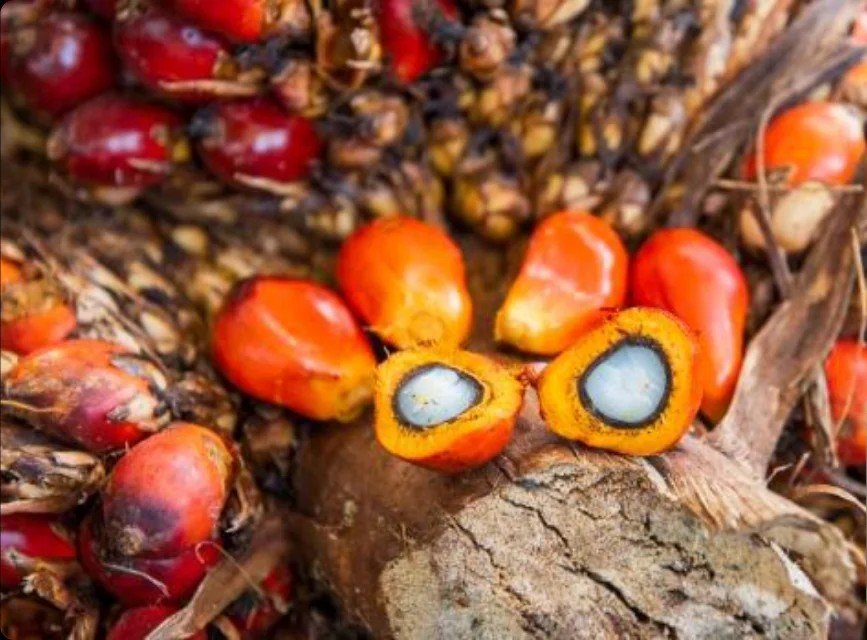
The tree produces clusters of small, oval-shaped nuts with a reddish-brown outer skin. Inside each nut is where the good stuff lives — a rich, dark kernel packed with tocopherols (Vitamin E), oleic acid, and phytosterols. These compounds are what give batana oil its reputation for nourishing hair, soothing the scalp, and encouraging growth. ( Research on Elaeis oleifera composition — NCBI)
One of the most important things about Elaeis oleifera in Honduras is that it grows wild — meaning it’s harvested sustainably without clearing land or disrupting the ecosystem. No plantations. No monocultures. Just a forest doing what forests do, and people harvesting from it responsibly.
That distinction matters more than most people realize when they’re choosing a hair oil.
How Batana Oil Is Extracted — The Traditional Cold-Press Method
The extraction process is where batana oil truly earns its reputation. And it’s not fast. It’s not industrial. It’s entirely human.
Here’s how traditional batana oil is made:
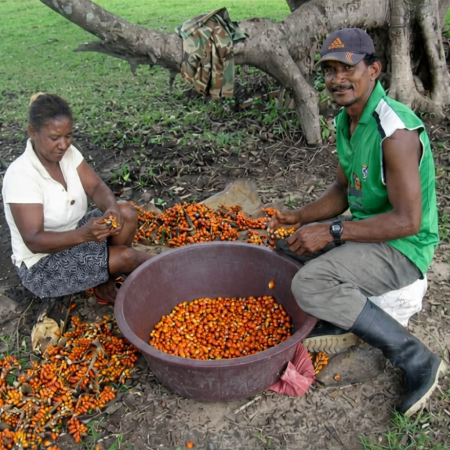
- Harvesting the nuts by hand. Miskito women — who have historically been the primary producers of batana oil — collect the ripe nut clusters from wild American palm trees. Ripeness is judged by color and texture, knowledge passed down through generations.
- Boiling the nuts. The harvested nuts are boiled in water to soften the outer pulp and begin loosening the oil-rich kernel inside.
- Manual pressing. The softened nuts are pressed and worked by hand — a labor-intensive process that can take hours. Some communities use simple wooden tools, but much of the work is done with the hands directly.
- Separating the oil. The raw oil separates and rises to the surface during the pressing process. It’s carefully collected — dark, thick, and deeply aromatic.
- No chemicals. No heat processing. No refinement. What you get is raw batana oil exactly as it comes from the nut.
This cold-press (or minimal-heat) method preserves the full nutritional profile of the oil. Every tocopherol, every fatty acid, every beneficial compound stays intact. That’s the direct opposite of how commercially refined oils are made.
It’s worth pausing on the role of Miskito women here. They are the knowledge keepers, the producers, and the backbone of batana oil’s existence. Supporting authentic batana oil means supporting them directly.
Why the Origin of Batana Oil Matters for Quality
Here’s something the beauty industry doesn’t always talk about openly: not all batana oil is real batana oil.
As the global demand for this ingredient has grown, so has the number of products claiming to contain it — many of which are diluted with cheaper carrier oils, derived from the wrong palm species, or processed in ways that strip out the beneficial compounds entirely.
Knowing where batana oil comes from is your first line of defense as a consumer. Raw batana oil from La Mosquitia has a distinct dark color (ranging from reddish-brown to deep amber), a strong earthy-smoky scent, and a thick, dense texture. If your batana oil looks pale and smells faintly of nothing, something has been lost — or substituted.
At rawbatanaoil.com, we believe transparency is non-negotiable. Every batch of our oil comes with third-party lab testing results and a Certificate of Authenticity confirming the botanical source and purity. We don’t cut corners, because the Miskito communities who produce this oil don’t cut corners either.
If you want to understand what you’re putting on your hair, start with origin. Start with Honduras.
From La Mosquitia to Your Hair — Our Ethical Sourcing Promise
We’re going to be direct: the way batana oil is sourced matters just as much as the oil itself.
At rawbatanaoil.com, we source directly from Miskito producers in La Mosquitia — no middlemen, no import brokers skimming value out of the chain, no disconnect between the people who make the oil and the people who buy it. When you purchase from us, a meaningful portion of that transaction flows back to the indigenous families who harvested and pressed that oil.
This matters for several reasons:
- It supports cultural preservation. When Miskito producers are fairly compensated, they have a reason to continue the tradition rather than abandon it for other economic opportunities.
- It ensures quality. Direct relationships mean we know exactly how the oil was processed and handled.
- It respects sovereignty. Indigenous communities should benefit from their own knowledge and resources — not watch outsiders profit from them.
We visited La Mosquitia to build these relationships personally. We shook hands, drank coffee, asked questions, and listened. That experience shapes every decision we make about how this oil is sourced, packaged, and presented.
Buying authentic batana oil Honduras-origin isn’t just a personal care choice. It’s a choice that ripples outward into a community that deserves recognition and support.
We’d love for you to be part of that. Explore our raw batana oil here: SHOP
(Cultural Survival — Indigenous rights and traditional knowledge)
Bringing It Full Circle
We started this journey at the edge of a rainforest. We end it, hopefully, with a much clearer picture.
Where does batana oil come from? It comes from the wild American palm trees (Elaeis oleifera) growing along the river systems of La Mosquitia, Honduras. It comes from the hands of Miskito women who have pressed and perfected this oil for over 500 years. It comes from one of the most biodiverse and remote rainforests in the Western Hemisphere — a place that deserves our respect as much as the oil it produces.
This isn’t just an ingredient. It’s a living tradition carried by people who have cared for their hair, their community, and their forest long before batana oil ever reached a global audience.
When you choose authentic raw batana oil, you’re choosing that whole story. And we think that makes it something genuinely worth caring about.
Key Takeaways
- Batana oil comes from Honduras, specifically from the remote rainforest region of La Mosquitia in the northeastern part of the country.
- The oil is pressed from the nuts of the American palm tree (Elaeis oleifera), which grows wild without cultivation — making it a naturally sustainable resource.
- The Miskito people, known as “Tawira” (people of beautiful hair), have used batana oil for 500+ years as a cornerstone of their hair care and wellness traditions.
- Authentic raw batana oil is dark in color, thick in texture, and has a distinctive earthy-smoky scent — very different from refined or diluted imitations on the market.
- Choosing ethically sourced batana oil directly supports Miskito producers and helps preserve an irreplaceable indigenous tradition.
Frequently Asked Questions
Q1: Where does batana oil come from originally?
Batana oil originates from La Mosquitia, a vast tropical rainforest in northeastern Honduras. It is cold-pressed from the nuts of the American palm tree (Elaeis oleifera) by the Miskito indigenous people, who have used it as a hair and skin treatment for over 500 years.
Q2: Is batana oil the same as regular palm oil?
No — and this is an important distinction. Batana oil comes from Elaeis oleifera (the American palm), while commercial palm oil comes from Elaeis guineensis (the African oil palm). They are related but different species with different nutritional profiles. Batana oil is also traditionally cold-pressed and unrefined, which preserves its full range of beneficial compounds.
Q3: How can I tell if batana oil is authentic?
Genuine raw batana oil is dark in color (reddish-brown to deep amber), has a thick consistency, and carries a strong, earthy, slightly smoky scent. It should come with documentation of its botanical origin and ideally third-party lab testing confirming purity. Pale, odorless, or watery oils claiming to be batana should raise red flags.
Q4: Why is La Mosquitia important to batana oil’s quality?
La Mosquitia’s unique ecosystem — remote, biodiverse, and free from industrial agriculture — allows American palm trees to grow in their natural wild state. This means no pesticides, no monoculture farming, and no environmental disruption. The traditional harvesting and extraction methods used there have been refined over centuries specifically to get the highest quality oil from these trees. The origin isn’t just geography — it’s a quality guarantee.