- Free Shipping on All Orders -100% Authentic Batana Oil from Honduras

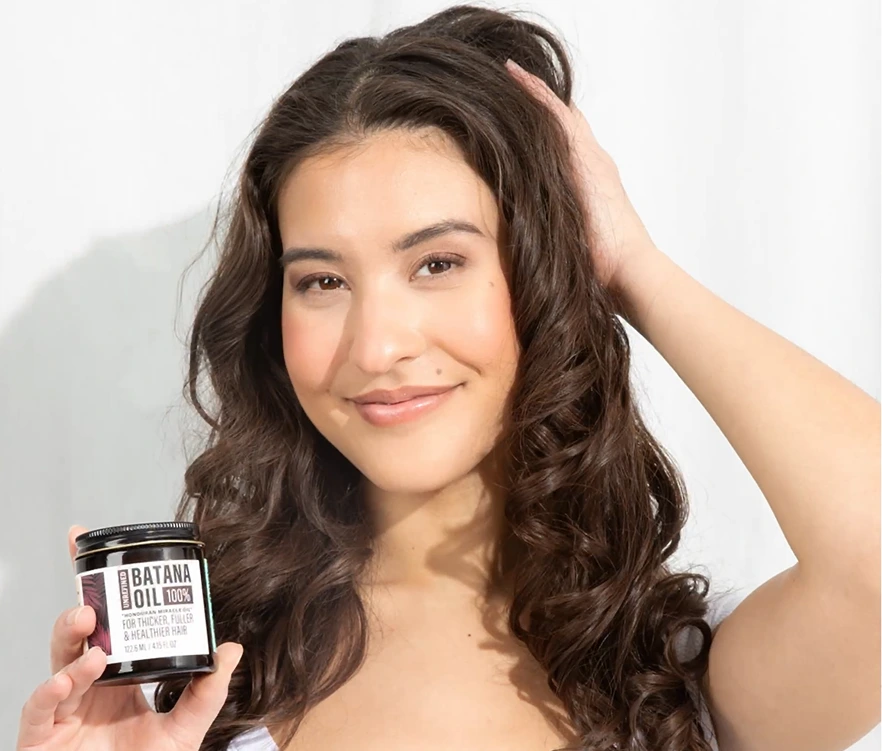
Split ends and brittle hair are two of the most frustrating hair problems — and they’re also among the hardest to fix. Once a hair strand splits, the damage is done. No product can permanently fuse a broken end back together. But the right oil can stop the damage from spreading, rebuild the hair’s internal structure, and prevent new breakage from forming. That’s exactly what batana oil for split ends does — and the science behind it is more compelling than most people realize.
Used for over 500 years by the indigenous Miskito people of Honduras — known as the Tawira, or ‘people of beautiful hair’ — raw batana oil is one of the few natural oils rich enough to both penetrate the hair shaft and seal the outer cuticle simultaneously. This dual action is what separates it from most oils on the market.
| Quick answer — what batana oil does for split ends and brittle hair |
| • It penetrates the hair shaft with oleic and linoleic acids, replenishing lipids lost to heat, chemicals, and friction. |
| • It coats and seals the outer cuticle, preventing split ends from traveling further up the strand. |
| • Its high Vitamin E (tocopherol) content rebuilds elasticity, reducing future breakage by strengthening fibers from within. |
Why Does Hair Become Brittle and Split in the First Place?
Before understanding how batana oil helps, it’s worth understanding the problem. Hair is made almost entirely of a protein called keratin, arranged in a layered structure. The outermost layer — the cuticle — is made of overlapping, scale-like cells that lie flat when hair is healthy. These cuticle cells are held together and protected by a thin lipid (fat) layer, the most important component being a fatty acid called 18-MEA.
When you heat-style, chemically treat (bleach, color, relax), or even just wash and brush your hair repeatedly, that lipid layer erodes. Research confirms that bleaching alone reduces total hair lipid content from around 8.7% down to 5.5% — a significant drop that leaves the cuticle exposed, rough, and porous. Without that lipid barrier:
- Moisture escapes constantly, leaving strands dry and stiff.
- The cuticle scales lift and separate, creating visible roughness and frizz.
- The inner cortex — the protein core — becomes vulnerable to fracture.
- The ends of your hair, the oldest part of each strand, take the most cumulative damage and eventually split.
Brittle hair is essentially lipid-depleted hair. The fix, logically, is to restore those lipids — from the inside out. This is where batana oil’s unique composition becomes critical.
What Makes Batana Oil Different From Other Oils for Split Ends?
Not all oils are created equal when it comes to hair repair. The key difference lies in whether an oil can actually penetrate the hair shaft — or whether it just sits on the surface.
Hair oil absorption research shows that oils with smaller molecules and specific fatty acid profiles — particularly oleic acid and linoleic acid — are the most effective at crossing the cuticle and reaching the cortex. Both are present in high concentrations in raw batana oil.
Oleic acid — the deep-penetrating moisturiser
Oleic acid is an omega-9 monounsaturated fatty acid with an 18-carbon chain. Its molecular structure is compact enough to slip through gaps in the hair cuticle and enter the cortex, where it replenishes depleted lipids, restores flexibility, and reduces protein loss. A landmark study by Rele and Mohile demonstrated that oleic acid can pass through the hair cuticle and measurably improve elasticity — meaning hair that bends instead of snapping.
For brittle hair, this is critical. Elasticity is what allows a strand to stretch under tension (from combing, pulling, or styling) without breaking. Hair with depleted oleic acid lacks this give — it snaps instead. Regular application of batana oil restores this elasticity from within, not just on the surface.
Linoleic acid — the lightweight rebuilder
Linoleic acid is an essential omega-6 fatty acid your body cannot produce on its own. Scientific research has shown that linoleic acid deficiency is directly linked to hair loss and degraded hair quality. It plays a role in the integrity of the scalp’s lipid barrier and in stimulating dermal papilla cell growth — the cells at the base of hair follicles responsible for producing new hair. When applied topically, linoleic acid helps restore the hair fiber’s structure and keeps the scalp environment healthy enough to support strong new growth.
What makes batana oil particularly powerful is that it provides both oleic and linoleic acids together. Oils high in only one of these fatty acids can fall short — too much oleic acid alone can feel heavy; linoleic acid alone may not provide enough richness for severely damaged hair. Batana oil’s natural balance of both makes it effective across all hair types, including fine, curly, coily, and color-treated hair.
Vitamin E (tocopherols) — the antioxidant shield
Raw batana oil is exceptionally rich in tocopherols — the natural form of Vitamin E. Tocopherols neutralize free radicals, the unstable molecules generated by UV exposure, heat styling, and chemical treatments that degrade the hair’s protein and lipid structure. This antioxidant protection doesn’t just repair existing damage — it actively prevents future damage from accumulating, which is why consistent use of batana oil leads to progressively stronger, more resilient hair over time.
Batana Oil vs Other Popular Hair Oils for Split Ends
Here’s how raw batana oil compares to other commonly used hair oils for repairing split ends and brittle hair:
| Property | Batana Oil | Coconut Oil | Argan Oil | Castor Oil |
| Penetrates hair shaft | Yes — deeply | Yes (lauric acid) | Partial | No — seals surface |
| Repairs split ends | Excellent | Good | Good | Moderate |
| Reduces brittleness | Excellent | Good | Excellent | Moderate |
| Restores lipid barrier | Yes | Partial | Partial | No |
| Vitamin E (tocopherols) | Very high | Low | Moderate | Low |
| Works on all hair types | Yes | Not fine hair | Yes | Heavy on fine |
| Seals & conditions | Both | Penetrates | Both | Seals mainly |
How Batana Oil Actually Repairs Split Ends — Step by Step
Understanding the mechanism helps you use batana oil more effectively. Here’s what happens when you apply it to damaged hair:
Step 1: It melts and liquefies at body temperature
Raw batana oil is solid at room temperature — a rich, dark golden-brown paste. When you warm it between your palms, it melts into a liquid within seconds. This phase change matters: the warm oil has better fluidity, which improves its ability to penetrate the hair cuticle. Think of it like warm wax flowing into cracks versus cold wax sitting on top of them.
Step 2: Oleic acid slips through the lifted cuticle
Damaged hair has raised, rough cuticle scales — the very condition that causes frizz and that rough texture you feel when you run your fingers down the strand. These gaps in the cuticle, while a problem, also serve as entry points for oleic acid molecules. Once inside, they fill the spaces between cortical cells, restoring structural cohesion and reducing the water-loss that dries hair out between washes.
Step 3: The fatty acid complex binds to hair proteins
Inside the cortex, the fatty acids in batana oil interact with the keratin protein structure. Lipids and proteins in hair are interdependent — lipids act as a kind of mortar holding the keratin bricks together. Chemical treatments and heat styling break this lipid-protein relationship. Oleic and linoleic acids from batana oil begin to re-establish this bond, improving tensile strength (how much force the strand can handle before breaking) and reducing the protein loss that causes hair to feel limp and weak.
Step 4: The outer layer seals shut
While the smaller molecules penetrate inward, batana oil’s heavier lipid fraction — combined with its natural wax esters — creates a thin, flexible coating over the cuticle surface. This does two things: it smooths down the rough, lifted cuticle scales (instantly reducing frizz and adding shine), and it forms a barrier that locks in the moisture and nutrients already inside. For split ends specifically, this coating acts like a temporary seal — binding the separated layers of the end together and stopping the split from traveling further up the shaft.
Step 5: Vitamin E protects the repair
As the tocopherols in batana oil are absorbed, they go to work neutralizing oxidative damage in the hair fiber. This is particularly important for chemically processed or heat-styled hair, where free radical damage is ongoing. The antioxidant layer essentially puts a stop to the degradation process, allowing your hair to recover instead of continuing to deteriorate between applications.
| Important: batana oil temporarily seals splits — it cannot permanently reverse them |
| No oil — or any topical product — can permanently fuse a split end back together. The only permanent fix for split ends is a trim. |
| What batana oil does is seal the split temporarily, prevent it from traveling further up the strand, and dramatically slow the rate of new splitting by strengthening and protecting the hair fiber. |
| Think of it as damage control + prevention. Used consistently, it extends the time between trims and keeps your hair looking and feeling significantly healthier. |
How to Use Batana Oil for Split Ends and Brittle Hair
The way you apply batana oil matters as much as the oil itself. Follow this method for maximum repair and damage prevention.
| # | Step | What to do |
| 1 | Start with damp hair | Apply batana oil to slightly damp hair after washing, not dry hair. Damp hair has slightly open cuticles that allow better oil penetration. Dry hair with sealed cuticles will only get surface coating. |
| 2 | Warm the oil | Scoop a small amount (a pea-sized amount for short hair; a hazelnut-sized amount for long or thick hair) and rub it between your palms for 10–15 seconds until fully liquid. Do not microwave — body heat is enough and preserves the oil’s nutrients. |
| 3 | Apply ends-first | Start at the last 2–3 inches of your hair — the oldest, most damaged section. Work 70–80% of the product into the ends before moving to the mid-lengths. Only a very light touch should reach the roots to avoid buildup at the scalp. |
| 4 | Gently press and smooth | Instead of rubbing, press the oil into split ends between your fingers. This pushes the oil into the splits rather than just coating the surface. Then smooth down each section from root to tip to close the cuticle. |
| 5 | Leave in or rinse | For a leave-in treatment: use a very small amount on damp styled hair. For a deep repair mask: apply more generously, cover with a silk bonnet or warm towel, and leave for 30 minutes to overnight. Rinse with a gentle sulfate-free shampoo. |
| 6 | Repeat consistently | Use 2–3 times per week for damaged or brittle hair. Once weekly for maintenance once your hair condition improves. Consistency matters more than quantity — a small amount used regularly outperforms a heavy application done rarely. |
What to Expect — a Realistic Results Timeline
Batana oil is not an overnight fix, but results do come quickly when applied consistently. Here’s what our customers typically report:
| Results timeline with consistent use (2–3x per week) |
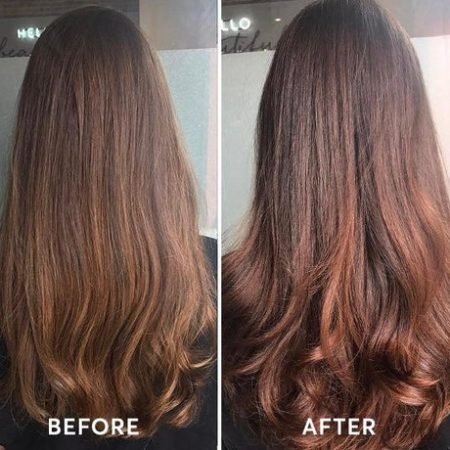
| After 1st use: Noticeably softer texture, reduced frizz, and added shine. Ends feel smoother and more manageable. |
| After 1–2 weeks: Hair feels more elastic — less snapping when combing. Ends look tidier even without trimming. |
| After 4–6 weeks: Significant reduction in breakage. New growth feels stronger. Existing damage is visibly contained rather than spreading. |
| After 3 months: Hair is measurably stronger, with less shedding, fewer split ends forming, and improved overall thickness and health. |
Signs Your Hair Needs Batana Oil Right Now
Your hair is telling you it’s lipid-depleted if you notice any of these:
- Ends feel rough, dry, or straw-like even right after conditioning.
- You see visible Y-shaped splits or fraying at the ends.
- Hair snaps easily when detangling — even with conditioner.
- Hair feels coarse and wiry but also appears thin and limp.
- Your scalp is dry and flaky despite using moisturizing products.
- You’ve recently bleached, colored, heat-styled excessively, or used chemical relaxers.
- Hair loses moisture quickly — feels dry again within hours of washing.
If three or more of those describe your hair, your strands are likely in a significant lipid deficit. Batana oil — used consistently — is one of the most effective natural ways to address this.
Does Batana Oil Work for All Hair Types With Split Ends?
Yes — and this is one of batana oil’s most notable qualities. Because of its balanced oleic-to-linoleic acid ratio, it adapts to different hair needs rather than overwhelming fine strands or under-delivering for thick, coily ones.
Curly and coily hair (3A–4C)
These hair types are naturally drier because the curl pattern makes it harder for the scalp’s natural sebum to travel down the strand. Batana oil is particularly effective here — its richness provides the deep moisture that curl patterns lose quickly, while linoleic acid keeps the formula lightweight enough not to weigh curls down or disrupt their definition.
Fine or straight hair
Use a smaller amount — a little goes a long way. Apply to the ends only, not the roots or mid-lengths, to avoid limpness. Fine hair with split ends responds well to batana oil’s sealing action because it smooths the cuticle without adding heaviness.
Color-treated and chemically processed hair
This is where batana oil truly excels. Chemical treatments strip the hair’s natural lipid layer aggressively. Batana oil replenishes these lipids without interfering with color. It is completely safe for bleached, colored, relaxed, and keratin-treated hair. Many of our customers report that their color appears more vibrant after regular use because smooth, closed cuticles reflect light more evenly.
Postpartum hair loss and thinning
Hormonal shifts after pregnancy cause significant shedding and hair fragility. The new growth that follows is often fine and fragile. Batana oil’s combination of scalp nourishment and strand strengthening makes it well-suited to this transitional period — protecting new growth while repairing existing strands weakened by the hormonal change.
See the full breakdown of who raw batana oil is for on our benefits page.
Frequently Asked Questions
Does batana oil actually fix split ends?
Batana oil cannot permanently fuse a split end — no topical product can. What it does is seal the split temporarily, prevent it from traveling further up the strand, and significantly strengthen the hair to slow the rate of new splits forming. For permanent removal of split ends, a trim is still necessary. But regular batana oil use dramatically extends the time between trims and keeps hair looking and feeling much healthier.
How long does batana oil take to repair brittle hair?
Most people notice softer texture and less frizz after the very first use. Meaningful structural repair — less breakage, improved elasticity, stronger new growth — typically becomes visible after 4–6 weeks of consistent use (2–3 times per week). Full transformation of severely damaged hair can take 3 months or more, but improvements accumulate with every application.
Can I use batana oil as a leave-in for split ends?
Yes, but use a very small amount. Warm a pea-sized portion between your palms until liquid, then smooth it through the last 2–3 inches of your hair on damp, styled hair before drying. Too much will make hair greasy. The goal is just enough to seal the cuticle and protect ends — not to saturate the strand.
Is batana oil good for heat-damaged brittle hair?
Yes — heat-damaged hair is one of batana oil’s strongest use cases. Heat styling strips the hair’s outer lipid layer and disrupts the cuticle structure. Batana oil’s oleic and linoleic acids replenish these lost lipids from within, while its high tocopherol (Vitamin E) content neutralizes ongoing oxidative damage caused by repeated heat exposure.
How do I know if my batana oil is authentic?
Authentic raw batana oil should be dark golden-brown to near-black in color, solid at room temperature (it melts with body heat), and have a distinct earthy, nutty, roasted-coffee aroma. If your batana oil is pale yellow, fully liquid at room temperature, or has a mild or neutral scent, it has likely been heavily processed or diluted. Our batana oil is third-party lab tested and sourced directly from Miskito communities in La Mosquitia, Honduras.
Can batana oil be used with other hair treatments for split ends?
Yes. Batana oil works well as part of a broader repair routine. Apply it after a deep conditioning treatment to seal in moisture. It pairs especially well with protein treatments — the protein rebuilds keratin structure while batana oil replenishes the surrounding lipid layer. Avoid applying batana oil immediately before a protein treatment, as it may create a barrier that reduces the protein’s absorption.