- Free Shipping on All Orders -100% Authentic Batana Oil from Honduras

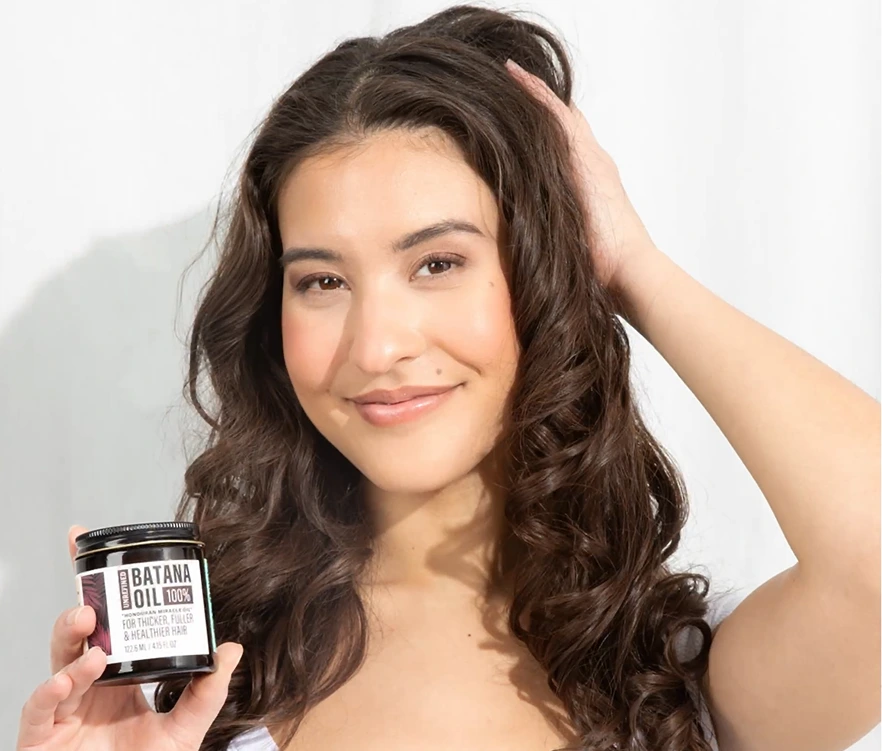
Quick Answer: Batana oil makes hair soft after the first use by replenishing lipids lost from the hair shaft, smoothing raised cuticle scales, and forming a thin emollient film that reduces friction between strands. The oleic and linoleic acids in batana oil penetrate the cortex to restore internal moisture balance, while the oil’s semi-solid texture lays the cuticle flat — giving hair an immediate silky feel that deepens with each use.
Why Does Hair Lose Its Softness in the First Place?
Before you can appreciate why batana oil soft hair results feel so immediate, you need to understand what’s actually making your hair feel coarse, rough, or dry — because the answer is more specific than “it’s damaged.”
Hair is made of three layers: the medulla (innermost), the cortex (the structural core of keratin proteins), and the cuticle (the outermost armor of overlapping scales). When healthy, those cuticle scales lie flat and tight, reflecting light evenly — which is why healthy hair looks shiny and feels smooth to the touch. When damaged, they lift, separate, and become rough and jagged, like roof shingles after a storm.
But texture isn’t just about the cuticle surface. Research published in PMC (NIH) confirms that lipids are essential components of healthy hair, playing a critical role in its structure, feel, shine, manageability, and mechanical strength. Natural hair contains roughly 8.7% lipid content. Bleaching alone can drop that to 5.5% — a 37% reduction. UV exposure, heat styling, harsh shampoos, and chemical treatments all contribute to ongoing lipid depletion.
Here’s the key insight: a decrease in hair lipid content directly correlates with reduced softness, diminished shine, increased breakage, and a rougher, coarser texture. It’s not just cosmetic. It’s structural.
Once internal lipids are lost from the hair shaft, they cannot be fully restored by the body. Sebum from the scalp replenishes surface lipids to some degree — but the internal lipids, including ceramides, cholesterol, and fatty acids within the cell membrane complex (CMC), have no biological regeneration mechanism. They have to come from somewhere else.
That’s where batana oil enters the picture — not as a trend, but as a genuinely lipid-replenishing treatment.
What Makes Batana Oil Different From Other Oils for Hair Softness?
Not all oils behave the same way on hair. Some sit on the surface as a coating. Others penetrate the shaft. The best ones do both — and batana oil lands in that category.
Batana oil is cold-pressed from the nuts of the Elaeis oleifera (American oil palm), a species native to Honduras and the rainforests of Central and South America. Its nutritional profile is genuinely distinctive for a hair oil:
- Oleic acid (omega-9): ~40–50% — a monounsaturated fat known for its ability to penetrate the hair cortex and deliver deep moisture
- Linoleic acid (omega-6): ~10–15% — a polyunsaturated acid that stays at the cuticle surface, creating a smooth, emollient film
- Palmitic acid: contributes to the oil’s occlusive sealing properties
- Tocotrienols and tocopherols (Vitamin E): 500–1,000 mg/kg — antioxidants that protect the lipid layer from oxidative degradation
- Beta-carotene and carotenoids: photoprotective compounds that preserve the integrity of the outer lipid coat
- Phytosterols and polyphenols: reinforce cuticle strength and reduce inflammation at the scalp level
What makes this profile special for softness is the dual-action nature of its fatty acids. According to hair science research from NaturallyCurly (citing cosmetic chemistry literature), oleic acid penetrates the cortex to supply elasticity and improved mechanical properties, while linoleic acid — with its more complex molecular structure — stays on the cuticle surface, providing an emollient protective film that smooths hair and improves combability.
In other words: batana oil works from the inside and the outside simultaneously — which is exactly why the softness it delivers feels different from what you’d get from, say, a surface-coating silicone product or a lightweight spray.
The Softening Effect After First Use: What’s Actually Happening
When you apply batana oil to your hair for the first time and notice it feels softer within minutes, that’s not placebo. There are three distinct molecular events happening.
Event 1: Oleic Acid Enters the Hair Shaft
Oleic acid — the dominant fatty acid in batana oil — has a molecular structure that’s well-suited for cuticle penetration. It belongs to the monounsaturated fatty acid family, with a single double bond that gives it a slightly bent shape — small and polar enough to slip through the lipid-rich CMC pathway into the hair’s cortex.
Once inside, it does two things. First, it hydrates the keratin proteins of the cortex from within — not by adding water, but by replenishing the lipid environment around the proteins, which reduces their internal friction and allows them to flex rather than snap. This is what you feel as “softness” — the hair shaft becoming more pliable, more elastic, and less prone to breaking under tension.
Second, oleic acid makes hair proteins more hydrophobic (water-repelling). Research on hair physics confirms that healthy, strong hair is naturally hydrophobic — it repels water to a controlled degree, preventing excessive swelling. Damaged hair loses this property and becomes hydrophilic, soaking up water too aggressively and triggering the swell-and-shrink cycle that causes hygral fatigue. Oleic acid, by penetrating and replenishing the internal lipid environment, partially restores this hydrophobicity — which is why hair treated with batana oil stays softer between washes, not just immediately after application.
Event 2: Linoleic Acid Smooths and Coats the Cuticle
While oleic acid goes deep, linoleic acid stays near the surface. Its polyunsaturated structure (multiple double bonds, more complex molecular geometry) makes it less able to penetrate deeply — but this isn’t a weakness, it’s a different kind of strength.
Linoleic acid adsorbs onto the cuticle surface, filling in micro-gaps between lifted cuticle scales and creating a smooth film. The same property that makes it an excellent emollient in skincare — its compatibility with surface lipids — makes it highly effective at cuticle-level hair conditioning. Smooth cuticles mean less friction between hair fibers, easier detangling, and a visible reduction in frizz.
This is the softness you feel the first time you run your fingers through hair treated with batana oil. The cuticle scales haven’t been physically “glued” down (the way silicones work), but the fatty acid film has filled in surface irregularities and created a genuinely smoother contact surface.
Event 3: The Emollient Film Reduces Inter-Fiber Friction
Even beyond individual cuticle smoothing, batana oil — when applied to the whole hair length — creates a thin, continuous emollient film over each strand. Research consistently shows that plant oils act on hair by adding “plasticity” or pliability — making hair bend easily without breaking and helping strands line up with their neighbors rather than tangling and snagging.
This is the “slip” you feel when you apply batana oil to dry hair. Strands glide past each other instead of catching. Knots release more easily. The hair moves as a unified, coordinated mass rather than individual fibers competing with each other. This property is especially transformative for textured hair types — 3A through 4C — where tight curl patterns create more inter-fiber contact points and therefore more friction.
The Marie Claire UK beauty editor who tested batana oil described it memorably: hair became “silkier, softer, hydrated and my ends — which are normally riddled with splits — appear more nourished.” She noticed these results on the first use. That’s not magic — it’s the emollient and penetrating fatty acid response happening exactly as the chemistry predicts.
How Batana Oil Softens Different Hair Types: What to Expect
The softening effect is real across all hair types, but it manifests differently depending on your texture, porosity, and damage level.
Coarse, Dry, or Brittle Hair
This is where batana oil produces the most dramatic first-use results. Coarse hair typically has a rougher cuticle structure with more natural porosity, and dry or brittle hair has already lost significant lipid content from the cortex. Batana oil addresses both problems directly — the oleic acid rushes in to fill lipid-depleted areas of the cortex, while linoleic acid and palmitic acid smooth the cuticle surface.
Users with this hair type consistently describe the transformation as immediate: what felt like straw before washing out a batana oil treatment feels genuinely pliable, silky, and manageable after. The Wimpole Clinic, medically reviewed by Dr. Meena Zareie (GMC), specifically noted that batana oil’s topical application “can moisturise your hair and improve its smoothness, softness and shine — particularly useful for conditioning and frizz-reduction in dry hair that feels like straw.”
Curly and Coily Hair (3A–4C)
Curly and coily textures sit in a structural disadvantage when it comes to softness and moisture distribution. The spiral curl pattern physically prevents sebum from traveling down the hair shaft the way it does in straighter hair, meaning the lengths and ends receive far less natural oil nourishment. This compounds over time into dryness, stiffness, and breakage.
Batana oil is particularly beloved in the natural hair community for this reason. Its combination of penetrating oleic acid and cuticle-smoothing linoleic acid addresses the exact deficit these textures face. The first use typically shows up as better curl definition — strands clumping rather than frizzing — plus a dramatic reduction in the stiffness or “crunchiness” that develops in dry coils.
Analysis of over 500 user reviews found that people with curly and textured hair showed the highest satisfaction rates, with 85% reporting significant improvements in manageability and moisture retention. The reason isn’t mysterious: batana oil essentially supplements what the scalp’s sebum can’t deliver at the ends of a tightly-wound curl.
Fine or Straight Hair
Fine and straight hair responds well to batana oil but requires a lighter touch. The oil’s richness — wonderful for coarse or dry textures — can weigh down fine hair or leave it looking greasy if overapplied. For this hair type, less is genuinely more: a single drop or two warmed between the palms and applied to the lengths and ends delivers the smoothing and softening benefits without the weight.
Used sparingly as a finishing step on dry styled hair, batana oil gives fine, straight hair a subtle glass-hair effect: smooth, reflective, and polished-looking with flyaways tamed. The softening is real — fine hair is often surprisingly fragile, and the emollient coating of batana oil reduces the static and friction that makes fine strands snag and break.
Chemically Treated or Color-Damaged Hair
This hair type has experienced the most dramatic lipid loss. Bleach, color, perms, and relaxers all work by breaking into the hair shaft and chemically altering its structure — which necessarily involves stripping lipids from the cortex and disrupting the CMC. Research published in PMC confirms that bleaching drops total hair lipid content from a healthy 8.7% to 5.5%.
For chemically treated hair, batana oil’s first-use softening effect can be particularly striking because the hair is starting from such a lipid-depleted baseline. The oleic acid has significant depleted territory to fill, the cuticle is often severely lifted and porous, and the cortex proteins are weakened. A batana oil treatment applied post-chemical service and left for 30–60 minutes gives visibly softer, more manageable results in a single session — not because it reverses the chemical damage, but because it replenishes what was stripped.
The Texture Change Timeline: From First Use to Long-Term Softness
Understanding what to expect at each stage helps you stick with the routine long enough to see the cumulative benefits.
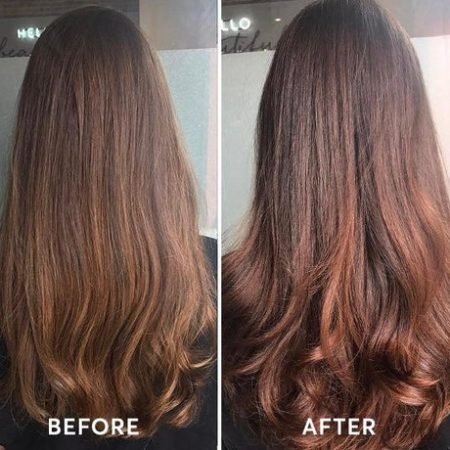
After the first use: Immediate smoothness, reduced frizz, and improved manageability. Hair feels more pliable and runs through your fingers with noticeably less resistance. Most people describe it as their hair simply “being easier” — detangling takes less effort, and curls or waves fall more naturally.
After 1–2 weeks (4–6 uses): The cumulative lipid replenishment starts becoming apparent. Hair feels consistently softer between washes, not just immediately after treatment. The need for leave-in conditioner may decrease. For damaged or high-porosity hair, this is often when friends start noticing a difference.
After 4–6 weeks: Structural improvements in elasticity — the hair’s ability to stretch slightly under tension and spring back — become noticeable. Breakage during detangling decreases measurably. The cuticle surface is more consistently smooth from ongoing replenishment. An analysis of batana oil reviews found that 87% of users experienced positive results, with most citing improved texture and reduced breakage as the leading changes.
After 8–12 weeks of consistent use: For coarse, damaged, or chemically treated hair, this is when long-term texture transformation typically reaches its most impressive stage. The combination of ongoing lipid replenishment, cuticle smoothing, and oxidative stress protection (from the vitamin E complex and carotenoids) adds up to hair that looks and behaves fundamentally differently from where it started.
How to Apply Batana Oil for Soft Hair: Getting the First Use Right
The technique matters, especially on the first use when you’re establishing the foundation.
Step 1: Warm the oil properly. Batana oil is semi-solid at room temperature — this is a sign of quality, not a flaw. Scoop a small amount (start with a pea-sized portion for short or fine hair; a hazelnut-sized amount for longer or thicker hair) and press it between your palms for 20–30 seconds until it melts completely to a liquid. This ensures even distribution and allows the fatty acids to penetrate rather than sitting in clumps on the hair surface.
Step 2: Choose your application method based on your goal.
- For maximum first-use softness (overnight mask): Apply to dry or slightly damp hair from mid-lengths to ends. For extra benefit, apply to the scalp too and massage gently. Cover with a silk or satin cap and leave overnight. Shampoo out in the morning. This extended contact time allows deep oleic acid penetration and has been described consistently as the method that produces the most dramatic next-morning softness.
- For quick pre-wash treatment (30–60 minutes): Apply to dry hair, section by section, focusing on the driest areas. Cover with a warm towel for 15 minutes to encourage cuticle-level opening and better penetration. Shampoo out. Great for weekly maintenance.
- For daily sealing and shine: Apply 1–3 drops to damp, already-conditioned hair as a moisture sealant. This adds a cuticle-smoothing layer that reduces frizz and maintains softness between wash days.
- For fine or oily hair: Use one drop maximum on dry, styled hair as a finishing product. Apply only to the lengths and ends, never the roots.
Step 3: Shampoo out thoroughly (when using as a mask). When rinsing a batana oil treatment, use a gentle sulfate-free shampoo and ensure the oil is fully emulsified and removed from the scalp. Residual oil on the scalp can cause buildup or clog follicles over time. The hair lengths, however, retain the benefit of the fatty acids even after washing — this is what makes the softness last.
Frequently Asked Questions
Does batana oil actually make hair softer? Yes, and the effect is often noticeable after the first use. Its oleic acid content penetrates the hair shaft to restore internal lipids and flexibility, while linoleic acid smooths the cuticle surface, reducing friction and frizz.
How quickly does batana oil work for soft hair? Most users report softer, more manageable hair immediately after the first rinse-out treatment. Cumulative improvements in elasticity and breakage reduction are typically noticeable within 4–8 weeks of consistent use 2–3 times per week.
Is batana oil good for dry, coarse hair? It’s particularly well-suited for dry and coarse hair, which tends to have the most lipid depletion and cuticle disruption. Batana oil’s fatty acid profile addresses both structural moisture loss and surface roughness directly.
Does batana oil work on straight hair? Yes, but use sparingly. One to two drops as a finishing product or as a light pre-wash treatment works best for straight hair. Too much will weigh it down or create a greasy appearance.
Can batana oil make hair too soft or mushy? Overuse without adequate protein balance can contribute to over-softening, but this is a risk with any heavy conditioning oil used excessively. Sticking to 2–3 uses per week and maintaining a protein-moisture balance in your routine prevents this.
Does batana oil reduce frizz? Yes. Frizz is primarily caused by raised cuticle scales and uneven humidity uptake. Batana oil’s emollient film flattens the cuticle and slows moisture exchange, both of which reduce frizz significantly.
What does batana oil smell like? Authentic raw batana oil has a distinctive earthy, smoky, coffee-like scent. Some refined or cold-pressed versions have a milder, more neutral smell. The scent fades considerably after washing.
The Bottom Line: Why Batana Oil Soft Hair Results Feel Different
There’s a reason so many first-time users of batana oil describe the experience as “different from other oils.” Most hair oils work on the outside — they coat, they shine, they sit. Batana oil works on the outside and the inside, simultaneously replenishing the lipid reserves that give hair its natural softness, flexibility, and shine while laying the cuticle surface flat.
The science is there: lipid depletion is what makes hair feel rough, brittle, and dry. Daily life — UV exposure, heat tools, shampoo, color — chips away at the lipid content of the hair shaft continuously. When you apply batana oil, its oleic acid migrates into that depleted interior and the linoleic acid smooths the outer surface. Within one treatment, hair behaves differently because it actually is different — the physical structure has been temporarily replenished with what it was missing.
This is why the Miskito people of Honduras — who named batana oil the “miracle oil” — have maintained notoriously healthy, soft, lustrous hair for generations despite living in an environment full of UV exposure, humidity, and heat. They weren’t chasing a trend. They discovered, empirically, that this particular oil produces results that other oils don’t. Modern cosmetic science, it turns out, agrees with them.