- Free Shipping on All Orders -100% Authentic Batana Oil from Honduras

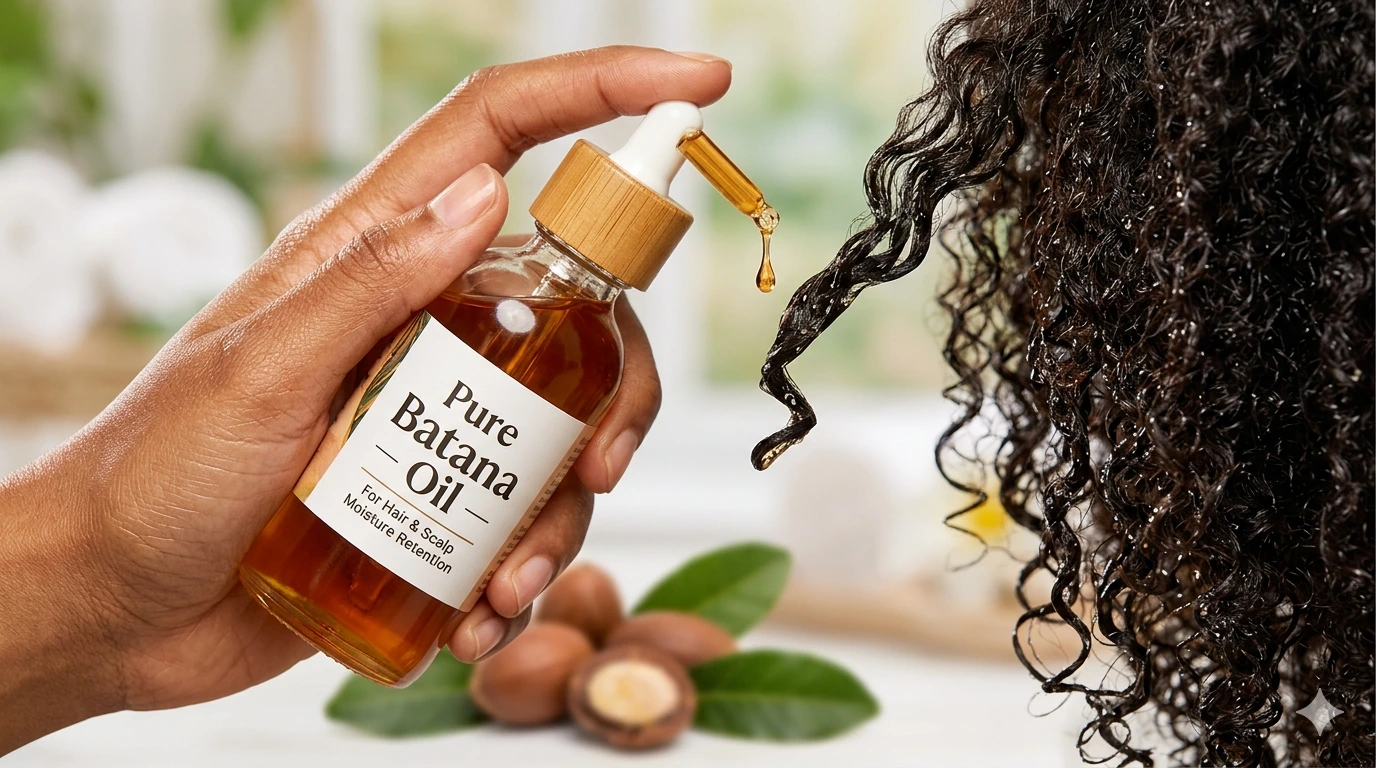
Quick Answer: 100% Raw Batana oil prevents hygral fatigue by forming an occlusive lipid barrier over the hair cuticle that slows moisture absorption and evaporation during wetting and drying cycles. Its high oleic acid and linoleic acid content also penetrates the hair shaft to reinforce the cell membrane complex (CMC), reducing the cuticle swelling that causes hygral damage over time.
The Problem Nobody Talks About: Your Hair Is Being Damaged by Water
Most people know heat and chemicals damage hair. Far fewer realize that water itself — specifically the repeated process of getting hair wet and letting it dry — is one of the most underestimated causes of long-term hair weakness.
It has a name: hygral fatigue.
And if you have curly, coily, high-porosity, color-treated, or frequently washed hair, there’s a very good chance it’s quietly happening to yours right now.
Here’s the good news: batana oil moisture retention properties make it one of the most effective natural tools for preventing hygral fatigue — and the science behind why is genuinely fascinating.
What Is Hygral Fatigue? The Science Behind the Swell-and-Shrink Cycle
To understand why batana oil helps, you first need to understand what hygral fatigue actually is at the structural level.
Your hair shaft is made of three layers: the medulla (innermost core), the cortex (the thick middle layer of keratin proteins that gives hair its strength and elasticity), and the cuticle (the outermost protective layer of overlapping scales, like shingles on a roof).
When hair gets wet, water molecules penetrate the cuticle layer and enter the cortex. Hair can absorb up to 30% of its own weight in water, causing it to swell significantly. When hair dries, water evaporates, and the hair contracts back down.
This expansion-and-contraction cycle sounds harmless. But it’s not — for the same reason a rubber band eventually snaps if you stretch and release it thousands of times. Each wet-dry cycle:
- Physically stresses the cuticle scales, pushing them partially out of alignment
- Weakens the cell membrane complex (CMC) — the lipid-protein “glue” that bonds the cuticle layers together and to the cortex
- Increases hair porosity over time, because damaged cuticles can’t close fully, making the hair even more vulnerable to water intake in future cycles
- Reduces elasticity, since the cortex’s protein bonds gradually fatigue under repeated mechanical stress
Research on hair structure confirms that air-drying — leaving hair wet for extended periods — causes measurable damage to the CMC precisely because of prolonged swelling. The longer and more frequently hair stays saturated, the more cumulative structural damage occurs.
High-porosity hair is especially vulnerable because its cuticle cells are more widely spaced and distorted, allowing water to rush in and out rapidly. This accelerates the fatigue cycle dramatically. Curly and coily hair textures are inherently more prone to high porosity, which is why hygral fatigue disproportionately affects people with textured hair.
The result — mushy, limp, over-soft hair that breaks easily, loses elasticity, and feels perpetually weak despite constant moisturizing — is what most people experience as “over-moisturized” hair, and it’s a direct consequence of hygral damage.
The Role of 18-MEA: Why Hair’s Natural Moisture Barrier Matters
Before diving into batana oil specifically, there’s one more piece of hair science worth understanding: 18-MEA (18-methyleicosanoic acid).
18-MEA is a fatty acid lipid that’s covalently bonded to the outermost layer of every hair cuticle. It’s approximately 1.1 nanometers thick — essentially invisible — but it’s one of the most important protective structures your hair has.
Its job is to make the cuticle surface hydrophobic (water-repelling). Healthy, undamaged hair naturally repels water to a degree because of 18-MEA, which limits how quickly and how much water can enter the hair shaft.
Here’s the problem: 18-MEA is stripped away by:
- Alkaline shampoos and chemical treatments (bleach, color, perms)
- Repeated heat styling (blow dryers, flat irons, curling wands)
- UV radiation and environmental weathering
- Friction from rough towel-drying or tight styling
Research published in Cosmetics (MDPI) confirmed that the removal of the 18-MEA layer is the primary reason for luster and texture loss — and that once it’s gone, it becomes permanently more hydrophilic (water-attracting). The hair cuticle essentially shifts from repelling water to inviting it in, which dramatically increases the rate and severity of hygral fatigue.
Once 18-MEA is depleted, it cannot be biologically regenerated. What you can do, however, is use lipid-rich oils that functionally mimic its occlusive, hydrophobic properties — which brings us to batana oil.
How Batana Oil Moisture Retention Works: The Two-Layer Defense
Batana oil doesn’t just moisturize hair in the conventional sense. It addresses hygral fatigue through two distinct but complementary mechanisms: surface sealing and internal reinforcement.
Mechanism 1: Occlusive Sealing at the Cuticle Surface
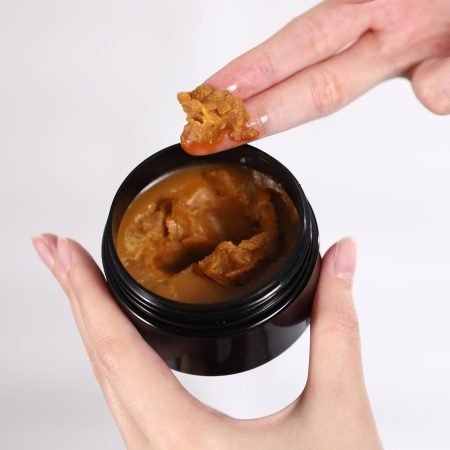
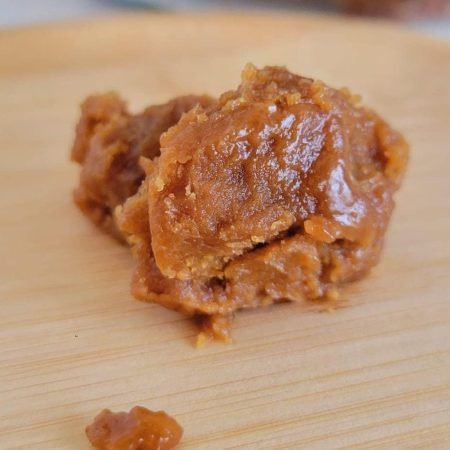
Batana oil has a thick, semi-solid consistency — similar to shea butter at room temperature — that gives it strong occlusive properties when applied to the hair. Occlusives physically slow the movement of water molecules in and out of the hair shaft by forming a film over the cuticle surface.
This is critical for hygral fatigue prevention because it:
- Slows water absorption during washing, reducing the peak swelling the cuticle experiences
- Slows water evaporation during drying, so the contraction phase happens more gradually and gently
- Reduces the amplitude of each swell-and-shrink cycle, meaning the mechanical stress on cuticle scales and the CMC is dampened with every wash
Think of it like this: if hygral fatigue is the damage from repeatedly stretching a rubber band to its maximum, batana oil’s occlusive layer is what limits how far it stretches each time. Less amplitude means less fatigue per cycle.
Applied as a pre-wash treatment before shampooing — a technique widely used in the natural hair community — batana oil creates exactly this kind of protective buffer. The oil film is in place before water hits the hair, so cuticle swelling is partially mitigated from the very first moment of wetting.
Mechanism 2: Fatty Acid Penetration and CMC Reinforcement
The occlusive effect is only half the story. Batana oil also contains fatty acids — primarily oleic acid (omega-9) and linoleic acid (omega-6) — that can penetrate the hair shaft itself and work from the inside.
Oleic acid’s molecular size and polarity allow it to move through the cuticle layer and into the CMC and cortex. Research referenced in the Journal of Cosmetic Science (2005) confirmed that oleic acid enhances cuticle softness and reduces water loss in the hair fiber — two properties directly relevant to hygral fatigue prevention.
Research in the International Journal of Cosmetic Science demonstrated that oils rich in oleic acid — the same fatty acid that dominates batana oil’s profile at roughly 40–50% — reduce protein loss in hair during washing. Protein loss is a direct consequence of hygral fatigue damage: when the CMC breaks down, the proteins of the cortex become exposed and wash out during each shampoo cycle.
By reinforcing the CMC from within, batana oil’s fatty acids are essentially performing structural maintenance at the molecular level — patching the cracks in the “glue” layer that keeps hair’s structure intact during water exposure.
Linoleic acid contributes its own dimension: as an omega-6 essential fatty acid, it supports the scalp’s lipid barrier health and has anti-inflammatory properties that can soothe the irritation that sometimes accompanies high-porosity or damaged scalp conditions. A healthier scalp barrier also produces sebum with a better lipid profile, which naturally contributes to the hydrophobicity of new hair growing from the follicle.
Batana Oil and Hair Porosity: Matching the Solution to the Problem
Not all hair has the same relationship with moisture, and understanding your porosity helps you get maximum benefit from batana oil.
High-Porosity Hair (Most at Risk for Hygral Fatigue)
High-porosity hair has compromised, raised, or gapped cuticles that allow water to enter and exit very rapidly. This is the hair type most vulnerable to hygral fatigue — the cuticle has little resistance to the swell-and-shrink cycle, and moisture evaporates almost as quickly as it enters, leaving strands perpetually dry and brittle despite frequent conditioning.
For high-porosity hair, batana oil functions as an occlusive sealant applied after moisturizing products. The LOC or LCO method (Liquid, Oil, Cream) — a moisture-layering technique popular in the natural hair community — uses a heavy oil like batana as the sealing step precisely for this reason. Batana oil’s thickness makes it particularly effective at slowing moisture evaporation from already-open cuticles.
Applied as a pre-wash treatment before shampooing, it simultaneously buffers against excessive water uptake, reducing hygral stress on hair that’s already structurally compromised.
Low-Porosity Hair (Moisture Absorption Challenge)
Low-porosity hair has very tightly sealed cuticles that resist water entry — which means it rarely suffers from hygral fatigue, but it struggles to absorb moisture in the first place. Products tend to sit on the surface rather than penetrating.
For this hair type, gentle heat is the key to getting batana oil working. Applying it to damp hair, then wrapping in a warm towel or sitting under a hair dryer for 10–15 minutes, temporarily raises the cuticle slightly and allows the oil’s fatty acids to penetrate. The heat also makes batana oil — which is solid at room temperature — fully liquid, improving its distribution and absorption.
Wavy, Curly, and Coily Hair (Structural Vulnerability + Dryness)
These textures are structurally more prone to high porosity and experience naturally greater difficulty distributing the scalp’s sebum down the spiral hair shaft. This means the outer cuticle layer receives less of the natural oils that would otherwise maintain its hydrophobicity.
Batana oil compensates for this structural disadvantage directly. Its density and fatty acid profile closely mirror what sebum provides — essentially supplementing what the scalp can’t deliver along the length of a tightly coiled strand.
Research specifically examined batana oil’s benefits for 4C hair (the tightest coil pattern), noting that the swelling and contracting of washing presents particular hygral fatigue risk for this texture. Oils rich in oleic acid like batana significantly reduce the friction coefficient on the hair surface, which translates to easier detangling and less breakage — two of the most common complaints associated with hygral-fatigued hair.
Batana Oil vs. Other Moisture-Sealing Oils: How Does It Compare?
It helps to put batana oil’s properties in context with other well-studied hair oils.
Coconut oil is often cited as the gold standard for protein loss prevention, thanks to its lauric acid content and low molecular weight that allows it to penetrate deeply into the cortex. A landmark study in the Journal of Cosmetic Science showed coconut oil reduces protein loss in both undamaged and damaged hair — a mechanism directly relevant to hygral fatigue. Batana oil shares this penetrating capacity through its oleic acid, though via a different molecular pathway.
Argan oil, rich in tocopherols and oleic acid, is well-studied for improving elasticity and hydration — but its relatively thin consistency gives it less occlusive sealing ability than batana oil’s semi-solid texture.
Mineral oil and sunflower oil primarily provide surface protection and don’t penetrate effectively, limiting their hygral fatigue benefits to the occlusive layer only.
Batana oil’s advantage is its dual-action profile: the thick consistency provides meaningful occlusive sealing (comparable to castor oil or shea butter), while its oleic and linoleic acid content allows simultaneous interior penetration. Few natural oils offer both mechanisms in a single ingredient.
Signs Your Hair Is Experiencing Hygral Fatigue
Mushy or gummy texture when wet: Hair that feels overly soft, stringy, or gummy when wet — rather than just smooth — is showing classic hygral fatigue. The cortex proteins have been weakened by repeated water expansion. Batana oil’s pre-wash application helps prevent this by limiting peak swelling.
Low elasticity: Healthy hair stretches slightly when pulled and springs back. Hygral-fatigued hair either snaps immediately or stays stretched. Regular batana oil use helps maintain the cortex’s structural integrity, supporting elasticity retention.
Breakage during detangling when wet: This is the CMC degradation at work — the bonds between hair layers have weakened. Batana oil’s fatty acids penetrate and reinforce the CMC, reducing this vulnerability.
Perpetual dryness despite constant moisturizing: When cuticles won’t close properly due to repeated swelling damage, moisture evaporates as fast as it’s applied. Batana oil’s occlusive layer slows this evaporation, making moisture treatments more effective and longer-lasting.
Increased frizz and reduced curl definition: Raised, damaged cuticles scatter light (causing dullness) and disrupt curl pattern consistency. Batana oil smooths and lays down cuticle scales, restoring curl clumping and reducing halo frizz.
How to Use Batana Oil for Maximum Moisture Retention
The Pre-Wash Treatment (Best for Hygral Fatigue Prevention)
This is the most important application for preventing hygral fatigue.
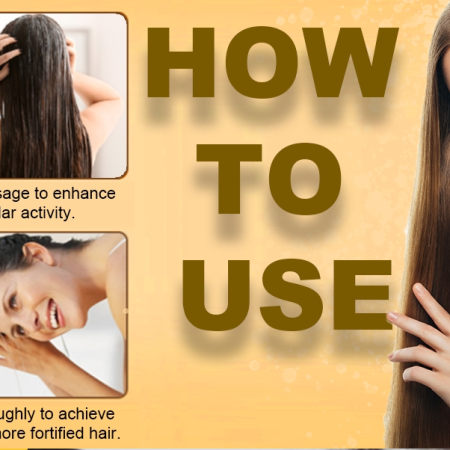
- On dry hair before washing, warm a small amount of batana oil between your palms until it melts
- Apply from mid-lengths to ends (the most vulnerable sections, furthest from the scalp’s natural oils)
- For very high-porosity or damaged hair, apply to the scalp and roots too
- Leave on for a minimum of 30 minutes, ideally 1–2 hours (or overnight under a silk cap)
- Shampoo as normal — the oil barrier will reduce peak water swelling during washing
Why this works: The oil is physically present on the cuticle before water exposure, providing both occlusive slowing of water uptake and pre-loaded fatty acids to reinforce the CMC during the wash.
The LOC/LCO Sealing Method (Best for Moisture Retention After Washing)
This technique maximizes batana oil moisture retention for high-porosity hair specifically.
- LOC: Apply a water-based leave-in conditioner (Liquid), then batana oil (Oil), then a butter or cream (Cream)
- LCO: Apply leave-in conditioner, then cream, then batana oil as the final seal
The order matters: for very high-porosity hair that loses moisture rapidly, placing batana oil as the outermost layer (LOC) creates the strongest seal. For medium-porosity hair, placing it before the cream (LCO) allows the cream to also act as a top-layer seal.
The Overnight Deep Treatment (Best for Repairing Existing Damage)
- Shampoo and condition hair normally
- While hair is still damp, apply a generous amount of warmed batana oil throughout
- Cover with a silk or satin cap
- Leave overnight — the extended contact time allows deep fatty acid penetration
- Rinse out with a gentle shampoo in the morning
Use 1–2 times per week for 8–12 weeks to see cumulative improvement in elasticity and strength.
Frequency Caution: Avoid Creating New Problems
One important note: daily heavy oil application can cause buildup, which clogs the scalp and creates the exact over-saturation conditions that lead to hygral fatigue from over-moisturizing. Stick to 2–3 applications per week, focus on the lengths and ends rather than the scalp unless specifically treating dryness there, and use a clarifying shampoo once a month to prevent accumulation.
Frequently Asked Questions
Does batana oil seal moisture into hair? Yes. Batana oil’s thick, semi-solid texture acts as an occlusive sealant over the hair cuticle, physically slowing water evaporation after moisturizing and reducing the rate of water absorption during washing. Its oleic acid content also penetrates the shaft to reinforce the cell membrane complex from within.
Can batana oil cause hygral fatigue? Paradoxically, excessive oil use without adequate protein can contribute to over-softening that mimics hygral fatigue symptoms. Using batana oil too frequently without maintaining a protein-moisture balance may lead to limp, mushy hair. The recommended frequency of 2–3 times weekly avoids this risk.
Is batana oil good for high-porosity hair? Yes — high-porosity hair benefits most from batana oil’s occlusive and penetrating properties. Applied as a pre-wash treatment and as a sealant in the LOC method, it significantly reduces the swell-and-shrink intensity that causes hygral fatigue in porous hair.
How long does batana oil take to show moisture retention results? Most people notice softer texture and reduced frizz within the first 1–2 uses. Meaningful improvements in elasticity, reduced breakage, and better moisture retention typically require 4–8 weeks of consistent use 2–3 times per week.
Can batana oil replace conditioner? No. Batana oil is a sealant and reinforcer, not a humectant or detangler. It works alongside conditioner, not instead of it. Conditioner adds slip and surface-level smoothing; batana oil seals the benefit in and reinforces the hair’s structural barrier.
Is batana oil good for low-porosity hair? Yes, but application technique matters. Low-porosity hair requires gentle heat (warm towel, steam, or hair dryer on low) to temporarily open the cuticle and allow batana oil’s fatty acids to penetrate rather than sitting on the surface.
Does batana oil help with frizz? Yes. Frizz is largely caused by raised cuticle scales that allow atmospheric humidity to penetrate unevenly. Batana oil’s occlusive layer smooths and flattens the cuticle surface, reducing humidity uptake and improving light reflection — producing a smooth, natural gloss without the artificial lacquer effect of silicones.