

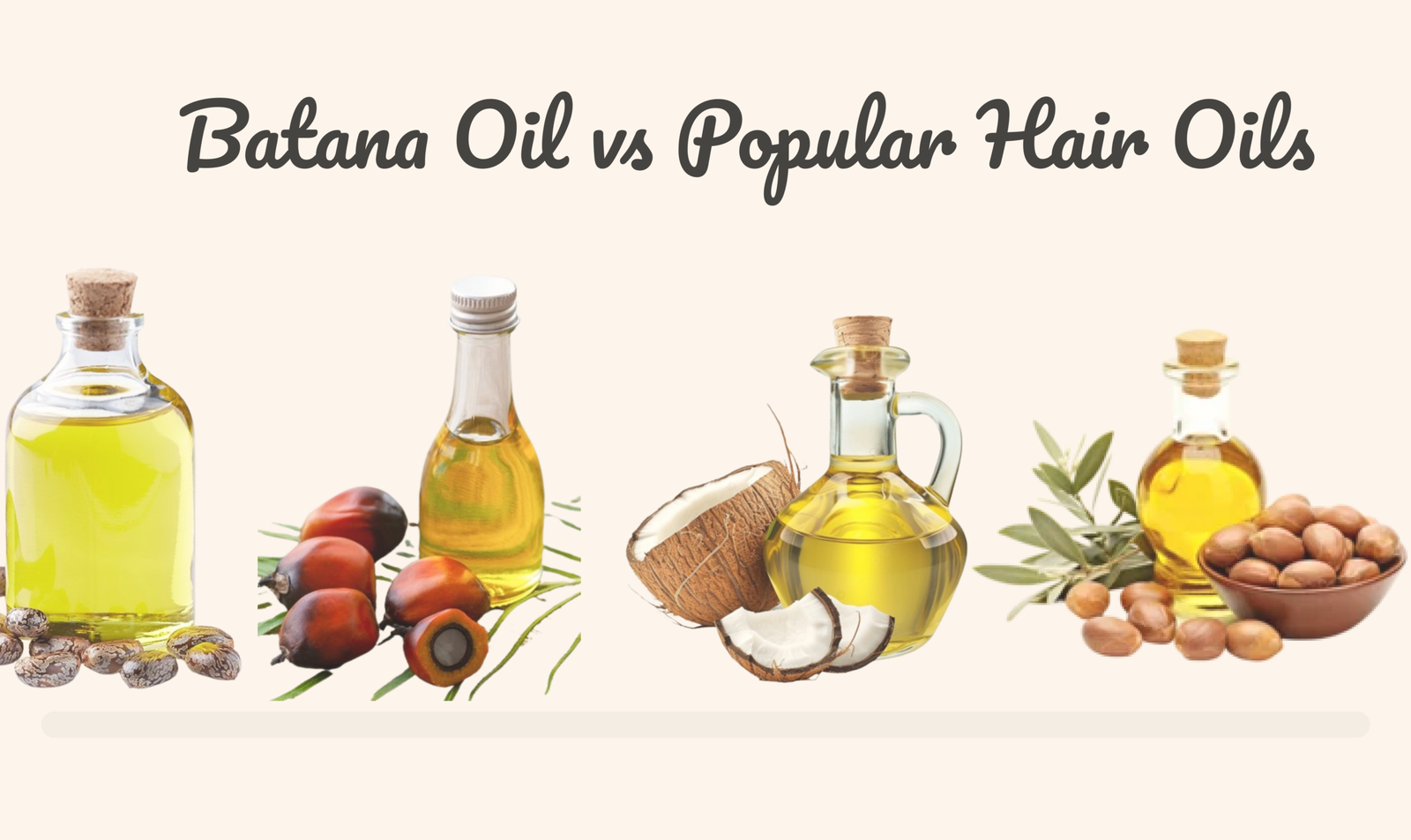
Are you standing in the hair care aisle, completely overwhelmed by the rainbow of hair oil options? Or perhaps you’re scrolling through endless online reviews, trying to figure out which magical elixir will finally solve your hair woes? You’re not alone.
The truth is, navigating the world of hair oils can feel like trying to solve a complex puzzle without all the pieces. With every oil claiming to be the “miracle solution” for everything from hair loss to split ends, how do you cut through the marketing noise to find what actually works?
Here’s where it gets interesting: among the more familiar options like coconut and argan oil sits a lesser-known contender—batana oil—that might just change your entire perspective on hair care.
By the end of this comprehensive comparison, you’ll know exactly how batana oil stacks up against every major hair oil on the market. More importantly, you’ll discover which oil is truly best for your specific hair concerns, whether that’s stubborn thinning, frustrating dryness, or that elusive quest for length.
Let’s cut through the confusion once and for all.
What Makes Batana Oil Different From the Start?
Before we dive into comparisons, you need to understand what sets batana oil apart from the very beginning.
Batana oil (sometimes called ojon oil) comes from the American oil palm (Elaeis oleifera) native to the lush rainforests of Honduras. For centuries, the indigenous Miskito people have harvested these nuts and extracted their precious oil using traditional methods passed down through generations.
The extraction process itself is fascinating and labor-intensive. The palm nuts are harvested by hand, sun-dried, and then carefully cracked to extract the kernels. These kernels are then boiled and pressed to release the rich, reddish-brown oil. This traditional cold-pressing method preserves all the bioactive compounds that make batana oil so effective.
Why “raw” and “unrefined” matter so much: Unlike many commercial oils that undergo extensive processing, filtration, and refinement (often stripping away beneficial compounds), truly batana oil retains its complete nutritional profile. This includes a rich array of fatty acids, antioxidants, and phytosterols that work synergistically to nourish both scalp and hair.
The women of the Miskito tribes are renowned for their ankle-length, lustrous hair—a testament to batana oil’s effectiveness that predates modern marketing claims by centuries. This isn’t a lab-created formula but rather a time-tested natural solution.
The distinctive reddish-brown color and nutty aroma of batana oil are signs of its purity and potency. If you see clear or light yellow “batana oil,” it’s likely been heavily refined and stripped of many beneficial components.
Now that you understand what makes batana oil unique from the start, let’s see how it measures up against the other major players in the hair oil game.
The Oils Being Compared
In this comprehensive analysis, we’ll be comparingbatana oil with nine other popular hair oils that dominate the market. Each has its loyal followers and specific claims to fame, but how do they truly measure up when put head-to-head? Here are the contenders:
- Raw Batana Oil – The lesser-known traditional oil from Honduras with centuries of use by indigenous communities
- Castor Oil – The thick, pale yellow oil known for its purported growth-stimulating properties
- Jamaican Black Castor Oil (JBCO) – The darker, ash-enriched version of castor oil popular in natural hair communities
- Argan Oil – The lightweight “liquid gold” from Morocco prized for its shine-enhancing properties
- Coconut Oil – Perhaps the most widely used oil, known for its penetrative abilities and protein retention
- Rosemary Oil – The aromatic essential oil that’s gained popularity for potential growth stimulation
- Jojoba Oil – The structural doppelgänger to human sebum known for balancing oil production
- Olive Oil – The kitchen staple that’s crossed over into hair care, rich in oleic acid
- Avocado Oil – The deep-penetrating oil packed with vitamins and healthy fats
- Peppermint Oil – The tingling essential oil that may stimulate blood flow to the scalp
Throughout our comparisons, we’ll examine each oil’s nutrient profile, effectiveness for hair growth, texture and usability, and ideal hair type matches—cutting through marketing claims to determine which truly delivers on its promises.
Let’s begin our oil-to-oil analysis to find out which deserves a place in your hair care routine.
Batana Oil vs Castor Oil
Nutrient Profile Comparison
Batana Oil:
Batana oil boasts an impressive nutritional lineup, with oleic acid (omega-9) making up approximately 40% of its fatty acid content. It’s also rich in tocopherols (vitamin E), phytosterols, polyphenols, and essential minerals like zinc and magnesium. What makes batana oil particularly special is its balanced ratio of saturated, monounsaturated, and polyunsaturated fatty acids.
Castor Oil:
Castor oil’s claim to fame is its unusually high concentration of ricinoleic acid (about 90%), a unique omega-9 fatty acid with anti-inflammatory properties. It contains smaller amounts of oleic and linoleic acids, along with vitamin E. While nutritionally impressive, castor oil’s profile is less diverse than batana oil’s broader spectrum of nutrients.
Hair Growth Effectiveness
Batana oil works on multiple fronts for hair growth: it may help block DHT (a hormone linked to hair loss) through its phytosterol content, nourishes follicles with essential nutrients, and improves scalp circulation. Users typically report results within 2-3 months of consistent use, with visible improvements in thickness and reduced shedding
Castor Oil:
Castor oil’s high ricinoleic acid content is believed to increase prostaglandin E2, which can promote hair growth. While it excels at creating a protective environment for growth, many users find the results more modest than the hype suggests. Its extreme thickness can also limit scalp penetration without proper techniques.
Texture, Smell, Ease of Use
With a medium-thick consistency, batana oil absorbs reasonably well while providing lasting moisture. Its distinctive nutty, earthy scent is moderate but not overpowering. It’s substantially easier to apply and wash out compared to castor oil, making it more suitable for regular use.
Castor Oil:
Castor oil is infamous for its honey-like, ultra-thick consistency that makes application challenging. It can be difficult to distribute evenly and often requires significant effort to wash out completely. The scent is relatively mild but has a slightly medicinal quality that some find off-putting.
Best for Which Hair Type
Batana oil is remarkably versatile, performing well across most hair types. It’s especially beneficial for:
- Medium to thick hair textures
- Curly, coily, and wavy patterns (3A-4C)
- Damaged or chemically treated hair
- Aging hair experiencing thinning
Castor Oil:
Castor oil shows its strengths with:
- Very dry, porous hair
- Thick, coarse textures
- Hair that needs significant weight and control
- Eyebrow and lash growth (where its thickness is less problematic)
Verdict + Winner for Specific Use Cases
For Overall Hair Growth: Raw Batana Oil wins due to its multi-faceted approach to stimulating growth while being significantly more pleasant to use regularly.
For Edge Regrowth: Tie. Both oils perform well for targeting hairline and temple areas, though castor oil’s thickness allows for more precise application.
For Scalp Health: Batana Oil wins with its broader nutrient profile and better absorption into the scalp.
For Ease of Use: Batana Oil wins by a significant margin. The struggle to work with and remove castor oil leads many users to eventually abandon it despite its benefits.
For Budget-Conscious Users: Castor Oil wins here, being more readily available and typically less expensive than authentic batana oil.
If you’ve been struggling with castor oil’s molasses-like consistency and dreading wash day after treatments, batana oil offers a more user-friendly alternative without sacrificing effectiveness for hair growth.
Batana Oil vs Jamaican Black Castor Oil (JBCO)
Nutrient Profile Comparison
Batana oil contains a diverse spectrum of nutrients, including significant levels of oleic acid, linoleic acid, and palmitic acid. Its vitamin E content acts as a powerful antioxidant, while its mineral content (including zinc and magnesium) supports cellular function in the scalp. This varied nutritional profile addresses multiple aspects of hair and scalp health simultaneously.
Jamaican Black Castor Oil:
JBCO shares castor oil’s high ricinoleic acid content (85-90%) but with a key difference: it contains ash from the roasted castor beans, which increases its alkalinity and adds trace minerals. This higher pH and mineral content distinguishes it from regular castor oil, potentially making it more clarifying and penetrating for the scalp.
Hair Growth Effectiveness
Batana oil’s effectiveness for hair growth comes from its comprehensive approach: it nourishes follicles, improves circulation, and may help balance scalp oils. Users often report not just increased growth but healthier new growth with improved thickness and strength. It tends to work more gradually but with progressive improvement over time.
Jamaican Black Castor Oil:
JBCO’s strength lies in its potent cleansing and stimulating effects on the scalp. The ash content helps remove buildup that might be hindering growth, while the ricinoleic acid increases blood flow to follicles. Users often report immediate improvements in scalp condition, with growth benefits following within 1-2 months of regular use.
Texture, Smell, Ease of Use
With its medium viscosity, batana oil strikes a balance between penetration and coating. It has a distinct nutty aroma that most users find pleasant or at least tolerable. It’s easier to distribute evenly through the hair and rinses out more readily than JBCO
Jamaican Black Castor Oil:
JBCO is extremely thick and sticky with a distinctive smoky, somewhat acrid smell due to the ash content. This scent can linger even after washing and may be off-putting to some users. The thickness makes it challenging to apply evenly, and it can require double shampooing to remove completely.
Best for Which Hair Type
Batana oil shines with:
- Most hair textures, from fine to thick
- Damaged hair needing rehabilitation
- Aging hair with diminished natural oils
- Hair exposed to environmental stressors
Jamaican Black Castor Oil:
JBCO works particularly well for:
- Very thick, coarse, or coily textures (especially 4B-4C)
- Low porosity hair that resists moisture
- Hair in protective styles (as a scalp treatment)
- Very dry or chronically under-moisturized hair
Verdict + Winner for Specific Use Cases
For Scalp Detoxification: JBCO wins due to its ash content and clarifying properties that help remove buildup while nourishing.
For Long-Term Growth: Batana Oil wins for its more balanced approach and easier incorporation into a consistent routine, which is key for sustained results.
For Immediate Thickness Appearance: JBCO wins by temporarily coating the hair shaft, creating the appearance of thicker hair almost instantly.
For Sensitive Scalps: Batana Oil wins as JBCO’s high alkalinity can sometimes irritate sensitive skin with regular use.
For Color-Treated Hair: Batana Oil wins by nourishing without the risk of color deposit from JBCO’s dark ash content.
If you’ve been using JBCO but finding the smell or stickiness too challenging to maintain consistent use, batana oil offers a more pleasant alternative while still providing strong growth benefits.
Batana Oil vs Argan Oil
Nutrient Profile Comparison
batana oil features a comprehensive nutritional profile with substantial oleic acid (omega-9), linoleic acid (omega-6), and palmitic acid. It contains higher levels of fat-soluble vitamins and phytosterols compared to argan oil, along with trace minerals that support overall scalp and follicle health.
Argan Oil:
Argan oil is celebrated for its high content of vitamin E (tocopherols)—containing up to three times more than olive oil. It features approximately 80% unsaturated fatty acids, primarily oleic and linoleic acids. It also contains polyphenols, sterols, and squalene, giving it strong antioxidant properties.
Hair Growth Effectiveness
Batana oil takes a multi-factorial approach to hair growth: potentially inhibiting DHT, nourishing follicles, balancing scalp oils, and strengthening existing hair to prevent breakage. Users typically report both new growth and better retention of existing length with consistent use.
Argan Oil:
While argan oil excels at protecting and conditioning hair, its direct impact on growth is more limited. Its primary growth benefits come from preventing breakage through increased elasticity and protecting the hair from damage. It’s better classified as a length-retention aid rather than a growth stimulant.
Texture, Smell, Ease of Use
Batana oil has a medium consistency that absorbs well with brief massage. Its natural nutty, earthy scent is distinct but not overwhelming. It leaves the hair moisturized but can feel slightly heavy on very fine hair types without proper application techniques
Argan Oil:
Argan oil is prized for its lightweight, fast-absorbing texture that leaves minimal residue. Its natural scent is very mild and nutty, but most commercial versions are essentially odorless. It’s exceptionally easy to use, making it perfect for daily application and on-the-go touch-ups.
Best for Which Hair Type
Batana oil works best for:
- Hair experiencing thinning or excessive shedding
- Dry, damaged, or overprocessed hair
- Medium to thick textures
- Hair needing significant rehabilitation
Argan Oil:
Argan oil is ideal for:
- Fine to medium hair textures
- Heat-styled hair needing protection
- Frizz-prone hair requiring smooth finish
- Hair that gets easily weighed down by heavier oils
Verdict + Winner for Specific Use Cases
For Active Hair Growth Stimulation: Batana Oil wins decisively with its more comprehensive approach to activating and supporting follicles.
For Daily Use & Styling: Argan Oil wins for its lightweight texture, versatility, and ease of incorporation into styling routines without buildup.
For Damaged Hair Repair: Batana Oil edges out argan oil with its richer nutrient profile that addresses deeper structural issues.
For Heat Protection: Argan Oil wins as its lightweight formula creates an effective thermal barrier without weighing hair down.
For Dry Climates: Batana Oil provides longer-lasting hydration in very dry environments where argan oil might be absorbed too quickly.
If your primary concern is stimulating new growth or addressing thinning areas, batana oil is the clear choice. However, if you’re mainly looking for a lightweight daily styler that tames frizz while protecting against heat and environment, argan oil remains unbeatable.
Batana Oil vs Coconut Oil
Nutrient Profile Comparison
batana oil contains a diverse mix of fatty acids dominated by oleic acid (omega-9) with significant amounts of linoleic and palmitic acids. Its varied profile includes fat-soluble vitamins, phytosterols that may help counter DHT, and minerals supporting overall scalp health. This diversity allows it to address multiple aspects of hair health simultaneously
Coconut Oil:
Coconut oil stands apart with its high concentration (approximately 50%) of lauric acid—a medium-chain fatty acid with antimicrobial properties. It also contains capric, caprylic, and myristic acids. While its nutrient diversity is narrower than batana oil, its molecular structure gives it exceptional penetrative abilities.
Hair Growth Effectiveness
Batana oil works comprehensively for growth: potentially inhibiting DHT (a key factor in pattern hair loss), nourishing follicles with a broad nutrient spectrum, improving microcirculation, and strengthening hair to prevent breakage-related thinning. Results typically develop gradually with consistent use.
Coconut Oil:
Coconut oil’s growth benefits are largely indirect. Its primary strength is preventing protein loss during washing and environmental exposure—which can significantly reduce breakage. However, it lacks direct follicle-stimulating properties and does little to address hormonal aspects of hair loss.
Texture, Smell, Ease of Use
Batana oil maintains a liquid state at room temperature with a medium viscosity. Its nutty, earthy scent is distinctive but generally pleasant. It absorbs gradually with massage and requires thorough (but not excessive) cleansing to remove
Coconut Oil:
Coconut oil fluctuates between solid and liquid states depending on temperature (solid below 76°F/24°C). Its tropical, sweet scent is generally well-liked. The changing consistency can make application inconsistent, and it can be difficult to distribute evenly when solid. It may require double shampooing to completely remove.
Best for Which Hair Type
Batana oil performs best for:
- Hair experiencing active thinning
- Aging hair with diminished vitality
- Medium to high porosity hair
- Dry or damaged hair needing rehabilitation
Coconut Oil:
Coconut oil works particularly well for:
- High porosity, protein-sensitive hair
- Hair damaged from chemical processing
- Hair exposed to frequent washing/swimming
- Medium to thick textures (can be too heavy for fine hair)
Verdict + Winner for Specific Use Cases
For Active Growth Stimulation: Batana Oil wins with its follicle-activating properties and potential DHT-inhibiting effects that coconut oil lacks.
For Protein Retention: Coconut Oil wins decisively, as research confirms its unique ability to prevent protein loss during washing and styling.
For Scalp Health: A tie, with batana oil excelling at balancing and nourishing while coconut oil’s antimicrobial properties help combat fungal issues.
For Preventing Breakage: Coconut Oil slightly edges out batana oil, particularly for protein-sensitive hair types.
For Year-Round Use: Batana Oil wins for its consistent texture regardless of temperature, making application reliable across seasons.
If you’ve been slathering coconut oil on your scalp for months with zero growth results, switching tobatana oil might provide the direct follicle stimulation you’re missing. However, a combination approach—coconut oil as a pre-wash treatment for the hair length and batana oil as a scalp treatment—might offer the best of both worlds.
Batana Oil vs Rosemary Oil
Nutrient Profile Comparison
batana oil is a complete nutritional package with a diverse fatty acid profile (oleic, linoleic, palmitic acids), fat-soluble vitamins, phytosterols, and minerals. As a carrier oil, it provides both nourishment and a protective emollient layer for the scalp and hair shaft.
Rosemary Oil:
Rosemary oil is fundamentally different—it’s an essential oil, not a carrier oil. Its profile centers on active plant compounds rather than fatty acids. Key components include 1,8-cineole, α-pinene, camphor, and carnosic acid. It contains powerful antioxidants but lacks the moisturizing fatty acids found in carrier oils.
Hair Growth Effectiveness
Batana oil promotes growth through multiple mechanisms: potential DHT inhibition, follicle nourishment, improved microcirculation, and strengthening existing hair to prevent loss. Its comprehensive approach addresses several factors that may be contributing to thinning hair
Rosemary Oil:
Rosemary oil’s growth effects are more targeted: research suggests it improves cellular metabolism and stimulates blood circulation to the scalp. A notable 2015 study found it comparable to 2% minoxidil for androgenetic alopecia. Its mechanism appears to involve improved blood flow and potential interference with DHT receptors.
Texture, Smell, Ease of Use
Batana oil has a medium viscosity that absorbs well with massage. Its nutty, earthy aroma is natural and moderately strong. It can be used undiluted as a scalp treatment, though it needs proper cleansing afterward.
Rosemary Oil:
Rosemary oil is very lightweight but cannot be used undiluted as it’s highly concentrated and can cause irritation. Its powerful herbaceous, camphoraceous scent is quite strong and distinctive. It must be diluted in a carrier oil (typically 3-5% concentration), making it unusable as a standalone treatment.
Best for Which Hair Type
Batana oil works well across most hair types but particularly excels for:
- Hair needing both growth stimulation and conditioning
- Dry, damaged hair requiring rehabilitation
- Aging hair with multiple concerns
- Medium to thick textures
Rosemary Oil:
Rosemary oil (properly diluted) is suitable for:
- Oily scalps that get weighed down by heavier oils
- Those specifically targeting androgenetic alopecia
- Scalps with inflammation or dandruff issues
- All hair textures when properly diluted
Verdict + Winner for Specific Use Cases
For Complete Hair Care Solution: Batana Oil wins as it addresses both growth and conditioning needs, while rosemary oil requires a carrier oil partner.
For Targeting Androgenetic Alopecia: Tie, with rosemary oil having specific research backing its efficacy against pattern hair loss, while batana oil approaches the issue through multiple pathways.
For Sensitive Scalps: Raw Batana Oil wins as rosemary oil can be irritating for some individuals, even when diluted.
For Oily Scalps: Rosemary Oil (properly diluted in a lightweight carrier) wins as it provides stimulation without excessive heaviness.
For Cost-Effectiveness: Rosemary Oil wins as a small bottle can last months when used at proper dilution rates.
It’s worth noting that these oils actually complement each other extremely well. One of the most effective approaches is using batana oil as the carrier for a few drops of rosemary oil, creating a synergistic treatment that combines the strengths of both oils.
Batana Oil vs Jojoba Oil
Nutrient Profile Comparison
Batana oil offers a comprehensive nutritional profile with various fatty acids (predominantly oleic acid), vitamins E and D, phytosterols, and essential minerals. This diverse nutrient spectrum addresses multiple aspects of hair and scalp health simultaneously.
Jojoba Oil:
Technically a liquid wax ester rather than an oil, jojoba is composed primarily of long-chain esters of fatty acids and fatty alcohols. It closely resembles human sebum in structure, containing gadoleic acid, erucic acid, and vitamins E and B. Its similarity to our scalp’s natural oils gives it unique properties.
Hair Growth Effectiveness
Batana oil promotes growth through several mechanisms: potential DHT-blocking through phytosterols, direct follicle nourishment, improved circulation from massage, and strengthening the hair shaft to prevent breakage-related thinning. Users typically report both improved density and quality of new growth
Jojoba Oil:
Jojoba’s growth benefits stem primarily from its balancing effect on sebum production. By mimicking the scalp’s natural oils, it can “trick” overactive sebaceous glands into producing less oil, creating a healthier growth environment. It also has mild anti-inflammatory properties that may help with conditions that impede growth.
Texture, Smell, Ease of Use
Batana oil has a medium viscosity with a distinctive nutty, earthy aroma. It requires some massage to fully absorb and thorough cleansing afterward. It provides longer-lasting moisture but can potentially build up without proper washing.
Jojoba Oil:
Jojoba oil stands out for its remarkably light, non-greasy texture and mild, barely perceptible nutty scent. It absorbs quickly without residue, making it ideal for leave-in applications. It rarely builds up or causes heaviness, even with frequent use.
Best for Which Hair Type
Batana oil works particularly well for:
- Hair experiencing significant thinning or loss
- Damaged or chemically treated hair
- Dry, brittle hair needing intensive nourishment
- Mature hair with declining natural oil production
Jojoba Oil:
Jojoba oil excels with:
- Oily scalps needing sebum regulation
- Fine hair easily weighed down by heavier oils
- Sensitive, irritation-prone scalps
- Hair exposed to frequent washing or styling
Verdict + Winner for Specific Use Cases
For Direct Growth Stimulation: Batana Oil wins with its more comprehensive approach to activating follicles and nourishing new growth.
For Balancing Oily Scalps: Jojoba Oil wins decisively thanks to its unique ability to regulate sebum production without stripping natural oils.
For Daily Use Without Buildup: Jojoba Oil wins for its light texture and quick absorption that doesn’t require frequent clarifying.
For Intensive Treatment of Damaged Hair: Batana Oil provides more substantial nourishment and repair capabilities.
For Sensitive, Irritated Scalps: Jojoba Oil edges ahead with its gentle, non-irritating properties and anti-inflammatory benefits.
If you’re dealing with an oily scalp that paradoxically leads to dry ends (a common combination), consider a strategic approach: jojoba oil for the scalp to balance oil production, and batana oil for mid-lengths to ends to provide lasting nourishment where needed.
Batana Oil vs Olive Oil
Nutrient Profile Comparison
Batana oil contains a complex mix of nutrients: approximately 40% oleic acid, significant linoleic acid, vitamins E and D, phytosterols with potential DHT-blocking properties, and trace minerals beneficial for follicle function. This diverse profile addresses multiple aspects of hair health simultaneously.
Olive Oil:
Olive oil is dominated by oleic acid (56-85%) with smaller amounts of linoleic and palmitic acids. It contains polyphenols (particularly oleuropein), vitamin E, and squalene. While nutritious, it has a less diverse fatty acid profile than batana oil and lacks some of the specialized compounds found in batana.
Hair Growth Effectiveness
Batana oil works through multiple pathways to promote growth: potential hormonal balance through DHT inhibition, direct follicle nourishment, improved blood circulation, and prevention of breakage through strengthening. It addresses both new growth and retention of existing hair.
Olive Oil:
Olive oil’s growth benefits are largely indirect. Its primary strengths are scalp health maintenance through antioxidant protection and preventing moisture loss that can lead to breakage. While it creates a healthy environment for growth, it lacks specific compounds directly targeting follicle stimulation or hormonal balance.
Texture, Smell, Ease of Use
Batana oil has a medium-weight consistency that absorbs with gentle massage. Its distinctive nutty, earthy aroma is natural but noticeable. It requires proper cleansing to remove but doesn’t typically build up with appropriate use.
Olive Oil:
Olive oil has a heavier, more viscous texture that sits on the hair rather than penetrating quickly. Its distinctive olive aroma can be quite strong and food-like, which some users find off-putting for hair care. It can be difficult to fully wash out and may require multiple shampoos to remove completely.
Best for Which Hair Type
Batana oil works best for:
- Hair experiencing thinning or excessive shedding
- Damaged or processed hair needing rehabilitation
- Aging hair with diminished vitality
- Most textures from fine to thick (with adjusted amounts)
Olive Oil:
Olive oil is most suitable for:
- Very dry, thick, or coarse hair textures
- Low porosity hair needing heat-assisted treatments
- Hair exposed to harsh environmental conditions
- Mediterranean and African hair textures traditionally accustomed to heavier oils
Verdict + Winner for Specific Use Cases
For Hair Growth Stimulation: Batana Oil wins with its targeted approach to activating follicles through multiple mechanisms that olive oil lacks.
For Kitchen-to-Bathroom Convenience: Olive Oil wins as it’s readily available in most kitchens for occasional treatments.
For Deep Conditioning Treatments: Olive Oil slightly edges ahead for very dry or low porosity hair that benefits from its heavier coating properties.
For Scent Preference: Batana Oil generally wins as its earthy scent is less food-associated than olive oil’s distinctive aroma.
For Absorption & Non-Greasy Feel: Batana Oil wins with its better balanced absorption rate compared to olive oil’s tendency to sit on the hair.
If you’ve been reaching for olive oil from your kitchen as a hair treatment but finding your pillowcases stained and your hair still not growing, batana oil offers a more specialized alternative specifically formulated for hair growth rather than salad dressing.
Batana Oil vs Avocado Oil
Nutrient Profile Comparison
Batana oil features a diverse nutritional makeup with oleic acid (omega-9) as its dominant fatty acid, complemented by linoleic and palmitic acids. It contains significant amounts of vitamin E, phytosterols that may help with DHT regulation, and minerals supporting scalp and follicle health.
Avocado Oil:
Avocado oil stands out with an impressive 70% oleic acid content, accompanied by linoleic and palmitic acids. It’s exceptionally rich in vitamin E, contains more vitamin D than most natural oils, and features lutein (a carotenoid antioxidant). It also offers substantial levels of potassium, lecithin, and phytosterols.
Hair Growth Effectiveness
Batana oil promotes growth through multiple pathways: potential hormonal balance via DHT inhibition, direct follicle nourishment, improved microcirculation, and strengthened hair strands for better retention. Users typically report both new growth and better preservation of existing hair.
Avocado Oil:
Avocado oil’s growth benefits come primarily from its deep penetrating abilities and exceptional moisture retention. It excels at delivering nutrients to the follicle bed and maintaining optimal hydration for growth. While it lacks some of batana’s specific growth-stimulating compounds, its penetration abilities may make its nutrients more accessible to follicles.
Texture, Smell, Ease of Use
Batana oil has a medium viscosity with a distinctive nutty, earthy aroma. It absorbs at a moderate rate, requiring some massage to fully penetrate. It washes out with regular shampooing and doesn’t typically cause excessive buildup.
Avocado Oil:
Avocado oil has a surprisingly light-to-medium consistency despite its high nutritional density. Its scent is very mild and generally pleasant, with slight grassy notes. It penetrates remarkably well for its nutrient content, though less quickly than lighter oils like jojoba or argan.
Best for Which Hair Type
Batana oil performs best for:
- Hair experiencing active thinning or loss
- Scalps with circulation issues or inflammation
- Hair showing signs of hormonal-related thinning
- Damaged hair needing comprehensive rehabilitation
Avocado Oil:
Avocado oil excels with:
- Very dry, dehydrated hair conditions
- UV or heat-damaged hair
- Low porosity hair that resists other treatments
- Aging hair needing intensive nourishment
Verdict + Winner for Specific Use Cases
For Direct Growth Stimulation: Batana Oil edges ahead with its more comprehensive approach to follicle activation.
For Deep Penetration & Nourishment: Avocado Oil wins thanks to its exceptional ability to penetrate the hair shaft and deliver nutrients deep within.
For Sun-Damaged or Heat-Styled Hair: Avocado Oil wins with its superior UV-protective properties and ability to repair heat damage.
For Cold Weather Protection: Avocado Oil provides slightly better protection against harsh winter conditions and static.
For Overall Value & Versatility: Batana Oil wins by addressing more aspects of hair health in a single product.
If your hair is severely dehydrated or damaged from heat styling while also experiencing thinning, you might benefit from alternating these oils: avocado oil as an intensive repair treatment and batana oil as your growth-focused scalp treatment.
Batana Oil vs Peppermint Oil
Nutrient Profile Comparison
Batana oil is a complete carrier oil containing a diverse array of fatty acids (primarily oleic acid), fat-soluble vitamins, phytosterols, and trace minerals. This comprehensive nutritional profile supports both scalp health and hair strand integrity.
Peppermint Oil:
Peppermint oil is an essential oil, not a carrier oil, composed primarily of menthol (40-50%), menthone, menthyl acetate, and other volatile compounds. Rather than nutrients, it contains active plant compounds that create specific biological responses like vasodilation and sensation changes.
Hair Growth Effectiveness
Batana oil promotes growth through multiple mechanisms: potential DHT inhibition, direct follicle nutrition, improved circulation, and strengthening existing hair to prevent loss. Its approach is comprehensive, addressing several factors that may contribute to thinning hair.
Peppermint Oil:
Peppermint oil’s growth benefits come primarily from its ability to stimulate blood circulation and increase dermal papilla cells. A 2014 animal study showed it outperforming minoxidil in some metrics. Its menthol content creates a cooling sensation that indicates increased blood flow to follicles.
Texture, Smell, Ease of Use
Batana oil has a medium viscosity with a distinctive nutty, earthy aroma. It can be used undiluted as a complete treatment and absorbs with gentle massage. It requires normal cleansing to remove completely.
Peppermint Oil:
Peppermint oil is extremely potent and cannot be used undiluted as it would cause severe irritation or chemical burns. Its powerful, sharp menthol scent is intense and long-lasting. It must be diluted to a 2-5% solution in a carrier oil for safe use, making it unsuitable as a standalone treatment.
Best for Which Hair Type
Batana oil works effectively for:
- Most hair types and textures
- Hair needing both growth and conditioning
- Dry, damaged hair requiring multiple benefits
- Sensitive scalps that need gentle treatment
Peppermint Oil (properly diluted):
Peppermint oil is particularly suited for:
- Oily scalps needing stimulation without heaviness
- Hair needing growth without additional weight
- Scalps with fungal or bacterial concerns
- Those who enjoy sensory feedback during treatments
Verdict + Winner for Specific Use Cases
For Complete Treatment Solution: Batana Oil wins decisively as it can be used alone, while peppermint oil must be diluted in a carrier oil.
For Immediate Stimulation Sensation: Peppermint Oil wins with its distinctive tingling that signals increased blood flow.
For Sensitive Scalps: Batana Oil is the safer choice as peppermint oil can cause irritation even when diluted for some individuals.
For Cooling Relief for Itchy Scalps: Peppermint Oil (properly diluted) provides superior immediate relief for itching and discomfort.
For Long-Term Nourishment: Batana Oil provides sustained benefits beyond the temporary stimulation that peppermint oil offers.
Like rosemary oil, peppermint oil works best as a complementary ingredient rather than a standalone treatment. Many users find that adding a few drops of peppermint oil to batana oil creates an ideal combination: the comprehensive nourishment of batana with the stimulating boost of peppermint.
The Master Comparison Table
| Oil Type | Main Active Compounds | Hair Growth Rating (1-10) | Scalp Health Rating (1-10) | Moisture & Shine Rating (1-10) | Best Hair Type | Texture | Scent | Price Range | Overall Rating |
|---|---|---|---|---|---|---|---|---|---|
| Raw Batana Oil | Oleic acid, tocopherols, phytosterols, minerals | 9 | 9 | 8 | All types, especially thinning | Medium | Nutty, earthy | $$$$ | 9/10 |
| Castor Oil | Ricinoleic acid (90%), vitamin E | 7 | 8 | 7 | Dry, thick, coarse | Very heavy | Mild, slightly medicinal | $ | 7/10 |
| JBCO | Ricinoleic acid, ash minerals, fatty acids | 8 | 8 | 7 | Coarse, coily, low porosity | Very heavy | Smoky, nutty | $$ | 7.5/10 |
| Argan Oil | Vitamin E, linoleic acid, oleic acid | 5 | 7 | 9 | Fine to medium, heat-styled | Light | Mild nutty or none | $$$ | 8/10 |
| Coconut Oil | Lauric acid, capric acid, vitamins | 6 | 7 | 8 | Medium to thick, high porosity | Medium (temp dependent) | Sweet, tropical | $ | 7/10 |
| Rosemary Oil | 1,8-cineole, α-pinene, camphor | 8 | 8 | 3* | All types when diluted | Very light* | Strong, herbaceous | $$ | 6/10* |
| Jojoba Oil | Gadoleic acid, erucic acid, vitamin E | 6 | 9 | 7 | Fine, oily-prone, sensitive | Light | Very mild, subtle | $$ | 8/10 |
| Olive Oil | Oleic acid, squalene, vitamin E | 5 | 7 | 8 | Thick, coarse, very dry | Heavy | Strong, distinctive | $ | 6/10 |
| Avocado Oil | Oleic acid, vitamin E, vitamin D, lutein | 7 | 8 | 9 | Dry, damaged, low porosity | Medium | Mild, slightly grassy | $$ | 8/10 |
| Peppermint Oil | Menthol, menthone, menthyl acetate | 8 | 8 | 2* | All types when diluted | Very light* | Strong, minty | $$ | 6/10* |
*Note: Ratings for rosemary and peppermint oils assume proper dilution in a carrier oil, as they cannot be used alone.
Price Range Key:
$ = Under $10 for standard size
$$ = $10-20 for standard size
$$$ = $20-30 for standard size
$$$$ = $30+ for standard size
This comprehensive comparison shows that while batana oil has the highest overall rating due to its balanced performance across all categories, each oil has specific strengths that might make it the ideal choice for certain conditions or hair types.
Can You Mix Batana Oil With Other Oils?
Absolutely! In fact, some of the most effective hair treatments combine batana oil with complementary oils to create synergistic blends that address multiple concerns simultaneously. Here are some powerful combinations and why they work so well together:
1. Growth Maximizer Blend
Ingredients:
- 2 tablespoons batana oil
- 10 drops rosemary essential oil
- 5 drops peppermint essential oil
- 1 teaspoon castor oil
Why it works: This combination creates the perfect storm for hair growth. Batana oil provides the nutritional foundation and potential DHT-blocking effects, rosemary stimulates follicles through improved circulation, peppermint enhances blood flow with its cooling vasodilation effect, and castor oil adds extra thickness and follicle protection.
Application: Massage into scalp, focusing on thinning areas, 2-3 times weekly. Leave on for at least 1 hour or overnight before washing.
2. Scalp Balancer Supreme
Ingredients:
- 1 tablespoon batana oil
- 1 tablespoon jojoba oil
- 5 drops tea tree essential oil
- 3 drops lavender essential oil
Why it works: This blend combines batana oil’s nourishing properties with jojoba’s sebum-regulating abilities to create perfect scalp balance. The addition of tea tree provides antimicrobial benefits, while lavender calms irritation—making this ideal for those with both scalp issues and hair growth concerns.
Application: Apply to scalp 1-2 times weekly, massaging thoroughly. Can be used as a pre-shampoo treatment (30 minutes) or overnight treatment for more intensive benefits.
3. Damage Recovery Treatment
Ingredients:
- 1 tablespoon batana oil
- 1 tablespoon avocado oil
- 1 teaspoon argan oil
- Optional: 2 drops frankincense essential oil
Why it works: This blend combines three powerhouse oils for hair repair: batana oil’s comprehensive nourishment, avocado oil’s deep penetration abilities, and argan oil’s cuticle-sealing properties. The optional frankincense adds regenerative properties that can help with cellular renewal.
Application: Apply from roots to ends, focusing extra product on damaged areas. Cover with a warm towel for 30-60 minutes or leave overnight. Use weekly until improvement is noticeable.
4. Winter Protection Shield
Ingredients:
- 2 tablespoons batana oil
- 1 tablespoon coconut oil (melted)
- 1 teaspoon shea butter (melted)
- 5 drops rosemary essential oil
Why it works: This richer blend combines batana oil’s nourishment with coconut oil’s protein-protection abilities and shea butter’s intensive moisture-sealing properties. The rosemary adds circulation benefits while also providing a pleasant scent that balances the nuttiness of batana.
Application: Apply to damp hair, focusing on ends and mid-lengths. Use as an overnight treatment once weekly during cold, dry months.
5. Lightweight Leave-In Growth Serum
Ingredients:
- 1 teaspoon batana oil
- 1 tablespoon argan oil
- 1 tablespoon rose water
- 5 drops rosemary essential oil
- Small spray bottle
Why it works: This lighter formula allows for more frequent application without buildup. Batana provides growth benefits, argan adds weightless moisture, rose water offers pH balancing, and rosemary stimulates circulation—all in a formula light enough for fine hair types.
Application: Shake well before each use. Spray onto roots and massage lightly. Can be used daily or every other day without washing out.
Tips for Successful Oil Blending:
- Always start with the carrier oils (batana, jojoba, argan, etc.) before adding essential oils.
- Respect dilution rates for essential oils—generally 2-5 drops per tablespoon of carrier oil is safe for most people.
- Test new blends on your inner wrist before applying to your scalp, especially if you have sensitive skin.
- Store blends in dark glass bottles away from heat and sunlight to preserve their potency.
- Make small batches (enough for 2-3 weeks) to ensure freshness and potency.
- Adjust ratios to match your hair type—use more lightweight oils like argan or jojoba if you have fine hair, or more batana and richer oils for coarse, dry hair.
By strategically combining batana oil with complementary oils, you can create customized treatments that address your specific hair concerns while maximizing the growth-promoting benefits that batana oil offers.
Which Hair Oil Should YOU Choose? (Decision Guide)
Feeling overwhelmed by all the comparison information? Let’s simplify things. Find your specific hair concern below and discover which oil is most likely to give you the results you’re looking for:
If You’re Experiencing Pattern Hair Loss or Thinning:
Best Choice: Batana Oil
Its potential DHT-inhibiting properties combined with follicle nourishment make it the most comprehensive option for addressing pattern hair loss.
Runner-Up: Rosemary Oil (diluted in a carrier oil)
Research shows comparable results to 2% minoxidil in some studies.
If You Have Slow-Growing Hair:
Best Choice: Batana Oil
Addresses multiple growth factors simultaneously for comprehensive support.
Runner-Up: A blend of castor oil and peppermint oil
Combines follicle protection with circulation stimulation.
If You Have an Oily Scalp but Still Want Growth Benefits:
Best Choice: Jojoba Oil with a few drops of rosemary essential oil
Balances sebum production while still providing growth stimulation.
Runner-Up: A light application of batana oil, focusing only on trouble spots
If You Have Dry, Brittle Hair That Breaks Easily:
Best Choice: Coconut Oil (for high porosity) or Avocado Oil (for low porosity)
Both provide excellent protection against breakage, with coconut specifically preventing protein loss.
Runner-Up: Batana Oil
Offers good breakage protection with additional growth benefits.
If You Have Dandruff or Scalp Irritation:
Best Choice: A mix of jojoba oil and tea tree oil
Balances scalp oils while providing antimicrobial benefits.
Runner-Up: Batana Oil with a few drops of tea tree oil
Nourishes while helping to address fungal concerns.
If You Have Heat-Damaged or Color-Treated Hair:
Best Choice: Argan Oil for daily protection, Avocado Oil for deep treatments
Argan seals the cuticle while avocado penetrates to repair internal damage.
Runner-Up: Batana Oil
Provides good repair properties with additional growth benefits.
If You Have Very Fine Hair Easily Weighed Down:
Best Choice: Jojoba Oil or Argan Oil
Both provide benefits without excessive heaviness.
Runner-Up: Very small amounts of batana oil applied primarily to the scalp
If You’re on a Tight Budget:
Best Choice: Olive Oil or Coconut Oil
Both are affordable and widely available with decent benefits.
Runner-Up: Castor Oil
Inexpensive with good growth-supporting properties.
If You Have Postpartum Hair Loss:
Best Choice: Pure Batana Oil
Addresses multiple factors involved in hormonal-related shedding.
Runner-Up: Rosemary-infused jojoba oil
Gentle enough for sensitive postpartum scalps while still effective.
If You’re Looking for a Daily Styling Oil:
Best Choice: Argan Oil
Lightweight with excellent frizz control and heat protection.
Runner-Up: Jojoba Oil
Natural feel with good moisture balance.
If You Have Multiple Hair Concerns Simultaneously:
Best Choice: Batana Oil
Its comprehensive approach addresses most common hair issues in one product.
Runner-Up: Customized oil blend
Mix oils based on your specific combination of concerns.
Remember that consistency is more important than which oil you choose. The best oil is the one you’ll actually use regularly as part of your hair care routine.
How to Use Batana Oil for Best Results
To maximize the benefits of batana oil, proper application techniques are crucial. Here are several effective methods to incorporate this powerful oil into your hair care routine:
Scalp Massage Treatment (for Maximum Growth)
This method targets the follicles directly for optimal stimulation.
You’ll need:
- 1-2 tablespoons batana oil
- Dropper bottle (optional but helpful)
- Shower cap or towel
- Comb or hair pick
Steps:
- Start with dry hair, detangled and sectioned into 4-6 parts.
- Warm the oil slightly between your palms (never microwave).
- Beginning at one section, use your fingertips or dropper to apply oil directly to your scalp along the part line.
- Using your fingertips (not nails), massage in circular motions with medium pressure for 3-5 minutes per section.
- Pay extra attention to thinning areas, spending additional time there.
- After covering your entire scalp, massage for an additional 5 minutes all over to stimulate blood flow.
- Cover with a shower cap to prevent transfer to pillows or clothing.
- Leave on for at least 2 hours—ideally overnight for maximum absorption.
- Shampoo thoroughly, possibly twice, to remove all oil.
Optimal frequency: 2-3 times weekly for active growth concerns; once weekly for maintenance.
Pre-Shampoo Deep Conditioning Treatment
This method nourishes both scalp and hair strands for comprehensive care.
You’ll need:
- 2-3 tablespoons batana oil
- Wide-tooth comb
- Shower cap
- Warm towel (optional)
Steps:
- Start with dry hair, detangled as much as possible.
- Apply oil generously to scalp first, then work through to ends.
- Use a wide-tooth comb to ensure even distribution.
- Twist hair up and cover with a shower cap.
- For deeper penetration, wrap a warm towel around the shower cap.
- Leave on for 30-60 minutes (longer for very dry or damaged hair).
- Shampoo as normal, potentially twice if needed.
Optimal frequency: Weekly for normal hair; twice weekly for damaged or very dry hair.
Hair Growth Mask Enhancement
This method boosts the effectiveness of your regular deep conditioning treatments.
You’ll need:
- 1 tablespoon batana oil
- Your regular deep conditioning mask
- Small mixing bowl
- Shower cap
Steps:
- In a small bowl, mix your regular deep conditioner with batana oil.
- Apply to freshly washed, towel-dried hair.
- Concentrate on mid-lengths to ends, but ensure some reaches the scalp.
- Cover with a shower cap and leave for the time recommended for your conditioner, plus an extra 15 minutes.
- Rinse thoroughly.
Optimal frequency: Every time you deep condition (usually weekly).
Overnight Intensive Treatment
For maximum absorption and benefits, this overnight method works wonders.
You’ll need:
- 2-3 tablespoons batana oil
- Old pillowcase or towel
- Shower cap or silk scarf
- Wide-tooth comb
Steps:
- Section dry hair into 4-6 parts.
- Apply oil generously to scalp and hair, ensuring thorough coverage.
- Massage scalp for at least 5 minutes to stimulate circulation.
- Gently detangle with a wide-tooth comb to distribute oil evenly.
- Cover with a shower cap or silk scarf.
- Place an old towel over your pillow to prevent staining.
- Sleep with the treatment in your hair.
- Wash thoroughly in the morning, possibly with two shampoo cycles.
Optimal frequency: Once weekly for normal hair; twice weekly for serious hair concerns.
Tips for Maximum Effectiveness:
1. Consistency Trumps Quantity
Regular application of smaller amounts is more effective than occasional heavy treatments. Create a schedule and stick to it.
2. Heat Enhancement
Using a warm towel, hooded dryer on low setting, or heat cap can significantly increase oil penetration and effectiveness.
3. Proper Removal
Incomplete oil removal can lead to buildup that counteracts benefits. Use a clarifying shampoo periodically if you notice residue.
4. Sectioning Matters
Proper sectioning ensures you don’t miss spots on your scalp, particularly in the crown and back areas that are harder to reach.
5. Nighttime Application
Evening treatments are generally more effective because your body’s repair mechanisms are more active during sleep.
6. Don’t Overdo It
More isn’t always better. Start with recommended amounts and adjust based on your hair’s response.
7. Document Your Journey
Take photos every 2-4 weeks in the same lighting to track progress objectively. Hair growth is gradual, and documentation helps maintain motivation.
With these methods and tips, you’re well-equipped to maximize the growth-promoting and hair-nourishing benefits of batana oil. Remember that patience and consistency are key—significant hair changes typically take at least 3 months to become visible.
Real Results: What to Expect From Batana Oil
Understanding the realistic timeline for results helps set proper expectations and keeps you motivated through your hair journey. Here’s what you might experience when using batana oil consistently:
Week 1: The Foundation Phase
During your first week using batana oil, you’ll likely notice:
- Immediate improvement in hair texture and manageability
- Enhanced shine and luster even after the first application
- Reduced frizz and smoother appearance
- Initial scalp comfort if you had itching or irritation
Some users experience what seems like increased shedding during this phase. Don’t worry—this is often just the oil loosening already-detached hairs that were stuck to the scalp. It’s actually a sign the treatment is working to clear the way for new growth.
Weeks 2-4: The Strengthening Phase
As you continue consistent applications, you should begin to notice:
- Significantly less breakage when brushing or styling
- Reduced hair in your brush or shower drain
- Improvement in scalp conditions like flaking or irritation
- Hair feels stronger and more resilient to manipulation
- The ends of your hair stay healthier longer
This phase is crucial for creating the foundation for new growth. While you may not see new hairs yet, your existing hair is becoming stronger, which will lead to better length retention.
Month 1-2: The Activation Phase
During the second month of consistent use, more noticeable changes begin:
- Baby hairs appearing around the hairline and temple areas
- Existing hair appears thicker due to increased diameter of hair strands
- Scalp feels healthier with better balance of natural oils
- Less visible scalp in previously thinning areas
- Improved hair elasticity—strands stretch more before breaking
Many users report their hair “feels different”—in a good way—during this phase. The oil’s cumulative effects on both scalp and hair strands become more apparent.
Month 3: The Visible Results Phase
This is typically when the most dramatic and visible results begin to appear:
- New growth becomes more substantial and noticeable
- Previously thin areas show measurable improvement in density
- Hair growth rate may slightly increase (normal rate is ½ inch per month)
- Hair texture often improves, becoming more manageable
- Color and vitality often enhance, with hair appearing more vibrant
This three-month mark is significant because it represents the time needed for hair to move through growth cycles and for new healthier hairs to become visible. If you’ve been taking progress photos, comparing day one to the three-month mark often shows surprising improvement.
Month 6: The Transformation Phase
With half a year of consistent use, more dramatic changes manifest:
- Sustainable results established with consistent, visible improvement
- Hair growth patterns become more synchronized
- Previously lost areas may show significant recovery
- Hair’s overall health reaches a new baseline
- Compliments from others become common as changes are now visible to everyone
At this stage, many users report feeling like they have “new hair” compared to when they started. The combined effects of stronger strands, reduced loss, and new growth create a transformative difference.
Important Considerations for Your Journey:
Individual Results Vary Based On:
- Your age (younger people typically see faster results)
- Underlying causes of hair issues
- Diet and overall health status
- Consistency of application
- Quality of batana oil used
- Genetic factors affecting your hair growth potential
Complementary Practices That Enhance Results:
- Adequate protein intake and overall nutrition
- Proper hydration (at least 8 glasses of water daily)
- Gentle handling techniques and protective styling
- Limiting heat styling and chemical treatments
- Regular scalp exfoliation (1-2 times monthly)
- Stress management (chronic stress significantly impacts hair growth)
When to Reassess:
If you’ve used batana oil consistently for three months with no noticeable improvement, consider:
- Checking the quality and authenticity of your oil
- Consulting with a dermatologist to rule out underlying medical conditions
- Adjusting your application technique or frequency
- Adding complementary treatments for your specific concerns
Remember that hair grows approximately ½ inch per month, and no oil can dramatically exceed your genetic potential. What batana oil can do is help you achieve your maximum natural growth rate while improving the quality and retention of that growth—creating the appearance of more dramatic results over time.
FAQ:
1. Is batana oil better than castor oil for hair growth?
While both oils support hair growth, batana oil generally outperforms castor oil for several reasons. Batana oil works through multiple pathways (DHT inhibition, follicle nourishment, improved circulation) while castor oil works primarily through ricinoleic acid’s stimulating properties. Additionally, batana oil’s medium consistency makes it significantly easier to apply and wash out compared to castor oil’s notorious thickness. For most people, this ease of use leads to more consistent application—the key factor in seeing results.
2. Can I mix batana oil with rosemary oil for better results?
Absolutely! This combination is particularly effective as they complement each other perfectly.batana oil provides the nutritional foundation and carrier properties, while rosemary oil adds proven follicle-stimulating benefits. For proper dilution, add 10-15 drops of rosemary essential oil per tablespoon of batana oil. This combination addresses hair growth through multiple mechanisms simultaneously: DHT inhibition, improved circulation, follicle nourishment, and cellular metabolism enhancement.
3. Why is batana oil so much more expensive than other hair oils?
The higher price point of authentic batana oil reflects several factors: its limited growing regions in Honduras, traditional hand-harvesting methods, labor-intensive extraction process, small-batch production, and the sustainable fair-trade practices that support indigenous communities. Unlike mass-produced oils, batana oil isn’t subjected to industrial processing that would reduce costs but also diminish its beneficial compounds. Consider it an investment—its comprehensive approach often means you need fewer additional hair products.
4. Is coconut oil just as good as batana oil for preventing hair breakage?
For pure breakage prevention, coconut oil may actually edge out batana oil, particularly for protein-sensitive hair. Research confirms coconut oil’s unique ability to prevent protein loss during washing and manipulation. However, batana oil offers more comprehensive benefits—addressing growth, scalp health, and conditioning simultaneously. Many users find the ideal approach is using coconut oil as a pre-wash treatment for length protection, and batana oil as a growth-focused scalp treatment.
5. Can I use batana oil on fine hair without looking greasy?
Yes, but technique matters. For fine hair, use these strategies: 1) Apply a very small amount (½ teaspoon is often sufficient), 2) Focus primarily on the scalp rather than the length, 3) Use as a pre-shampoo treatment rather than leave-in, 4) Ensure thorough washing afterward, possibly with a gentle clarifying shampoo. Some fine-haired users also find success diluting batana oil with lighter options like argan or jojoba oil for a more suitable consistency.
6. How does batana oil compare to Jamaican Black Castor Oil for edge regrowth?
Both oils can be effective for edge regrowth, but they work differently. JBCO creates a thicker protective coating and its ash content helps clear follicle blockages that may be impeding growth. Batana oil provides more comprehensive nourishment and potential DHT-blocking benefits that can be crucial for edges lost to traction alopecia or postpartum shedding. For severe edge loss, some users find alternating these oils (JBCO one day, batana the next) provides optimal results by combining their different strengths.
7. Will argan oil give me the same shine benefits as batana oil?
Argan oil typically produces more immediate surface shine due to its lighter molecular structure that creates excellent light reflection. Batana oil generates a deeper, more natural-looking shine that builds over time through improving the hair’s actual health rather than just surface reflection. If immediate glossiness is your priority, argan oil excels. For long-term improvement in your hair’s natural luster and health-based shine, batana oil is superior.
8. Can batana oil replace my regular conditioner like coconut oil sometimes can?
While batana oil provides excellent conditioning benefits, it works best as a treatment rather than a complete conditioner replacement. Unlike coconut oil, which can sometimes substitute for conditioner due to its unique protein-preservation properties, batana oil works more effectively when integrated into a complete hair care routine. Use it as a pre-conditioning treatment, or mix a few drops with your regular conditioner to enhance its effects rather than attempting a complete replacement.
9. How can I tell if I’m getting authentic batana oil vs. diluted versions?
Authentic batana oil has several distinctive characteristics: a rich reddish-brown color (never clear or pale yellow), a distinctive nutty/earthy aroma (not odorless), a medium viscosity that’s substantial but still pourable, and typically comes from Honduras with information about traditional extraction methods. Authentic oil generally costs more than other hair oils due to its specialized production. If the product is suspiciously inexpensive or lacks these characteristics, it’s likely diluted, refined, or not genuine batana oil.
10. Which oil combination gives the fastest results for hair growth?
For maximum growth stimulation, a combination of batana oil, rosemary oil, and peppermint oil (properly diluted) typically provides the most comprehensive approach. Batana oil delivers nutrient content and potential DHT-blocking, rosemary improves circulation and follicle metabolism, while peppermint enhances blood flow through vasodilation. This three-pronged approach addresses virtually all aspects of the growth cycle. However, even this powerhouse combination requires at least 8-12 weeks of consistent use to show visible results due to the natural hair growth cycle.
