If you’ve been hearing buzz about batana oil and finally decided to look it up, you probably have one very specific question running through your mind: what does it actually smell like? Maybe you’ve seen the gorgeous before-and-after hair photos, read about its roots in the Mosquitia rainforest of Honduras, and you’re almost ready to try it — but that one sensory unknown is holding you back. Fair enough. Nobody wants to commit to a hair oil that smells like something they’d rather forget. So let’s get into all of it — the scent, the texture, the color, and everything in between — so you know exactly what to expect before your first jar arrives.
What Does Batana Oil Smell Like?
Let’s just go ahead and be honest with you: raw batana oil has a strong, distinctive scent. It’s not a light floral or a breezy citrus. If you’re expecting something that smells like a luxury salon product, this will surprise you — and that’s actually a good thing.
The scent of raw batana oil is best described as earthy, smoky, and nutty with a slightly sweet undertone. Think of it like this: imagine the smell of toasted nuts mixed with a rich, woodsy campfire, with just a whisper of something almost chocolatey underneath. Some people compare it to:
- Roasted peanuts or natural nut butters
- Smoked wood or a gentle campfire
- Dark, unrefined shea butter (that classic “raw” smell)
- Earthy cocoa without the sweetness
It’s primal. It’s natural. And once you understand why it smells that way, it actually starts to feel like a badge of quality rather than a flaw.
Why Does Batana Oil Have Such a Strong Smell?
The scent comes directly from its source and its minimal processing. Batana oil is cold-pressed from the nuts of the ojon palm tree (Elaeis oleifera), which grows deep in the rainforests of Honduras. Indigenous Miskito women have been extracting this oil by hand for centuries using traditional methods — roasting the nuts, pressing them, and collecting the oil in its most pure form.
That roasting process? That’s where the smoky, nutty aroma comes from. It’s essentially baked right into the oil. And because raw, unrefined batana oil skips the bleaching, deodorizing, and chemical processing that most commercial oils go through, all of those natural aromatic compounds stay fully intact. You’re smelling centuries of tradition in every whiff.
Does the Batana Oil Scent Go Away After Application?
Here’s the reassuring part: yes, the scent fades significantly once the oil is absorbed into your hair.
When you first open the jar and apply it, the aroma will be present — especially if you’re using it in a warm space or applying it to damp hair (heat and moisture amplify scent). But as the oil absorbs and dries down, the smell mellows out considerably.
Most people find that:
- After 30–60 minutes, the scent has softened to a very mild, almost undetectable earthiness
- After an overnight treatment, there’s typically very little scent remaining by morning (especially after a light rinse or wash)
- With heat styling, the warmth helps the oil absorb faster, which also helps the scent dissipate more quickly
If you’re using it as a leave-in treatment or scalp oil, the scent will be more noticeable at first but should fade within an hour or two. Think of it the same way you might think about the scent of coconut oil or unrefined argan oil — strong when first applied, subtle once it settles in.
So if the smell is a concern, it’s really more of a temporary experience than a lasting commitment.
What Does Batana Oil Look Like?
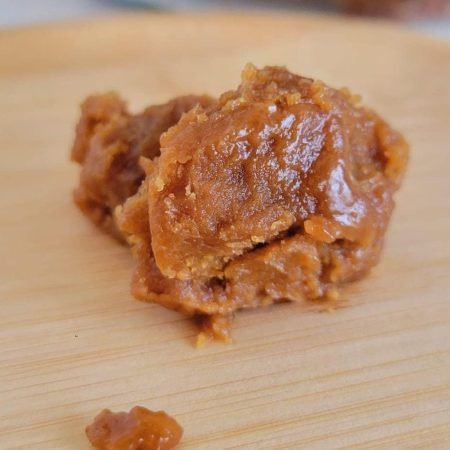
Before we even talk about how it smells, one of the first things people notice is the color. Raw batana oil is stunning, honestly. It has a deep, rich amber to reddish-brown hue — think dark caramel, mahogany wood, or even the color of aged whiskey. It’s warm-toned and visually rich, which reflects its high content of natural pigments and antioxidants.
In the Jar
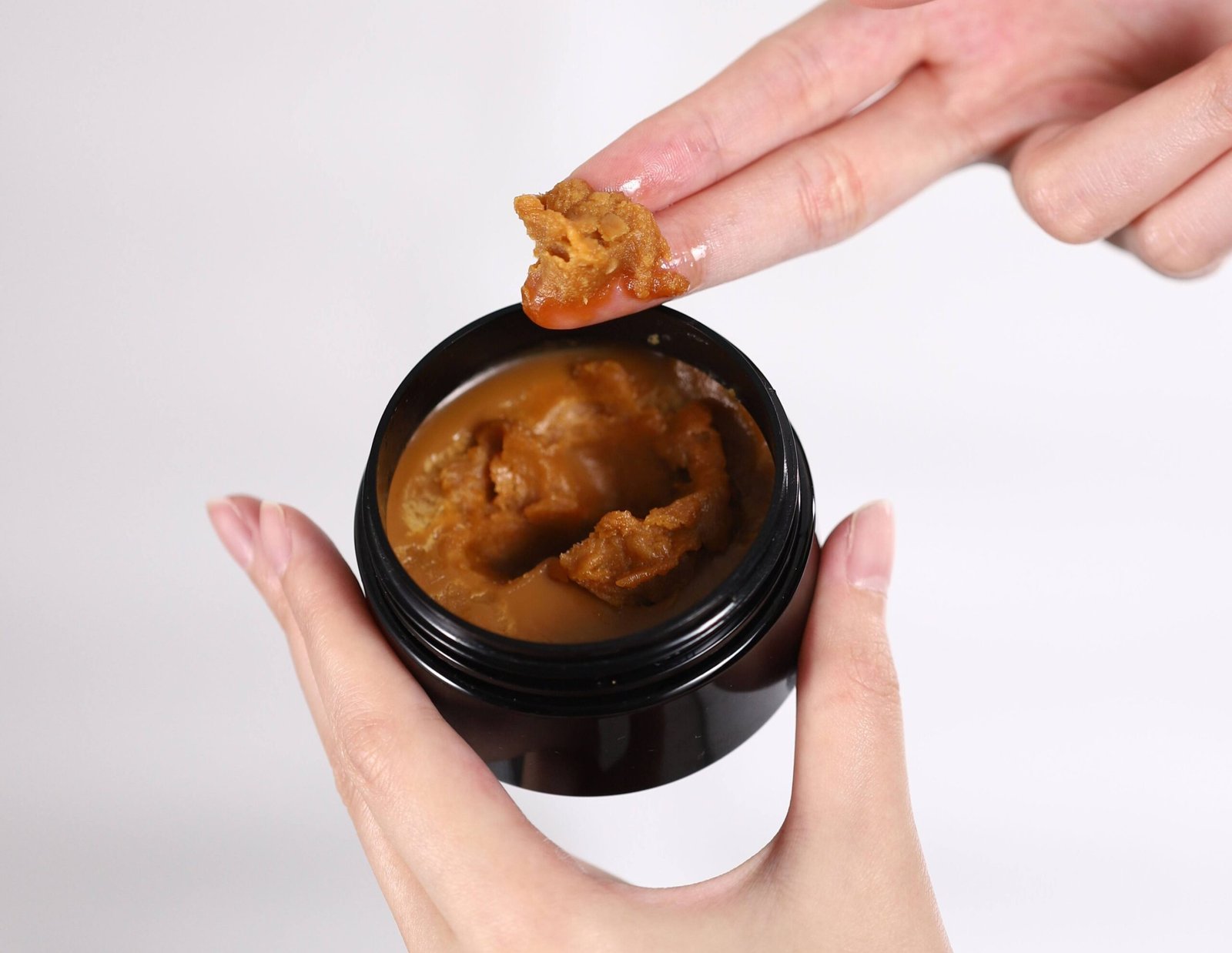
In the jar, raw batana oil typically appears as a thick, semi-solid to solid mass, especially at room temperature or in cooler climates. The color is deeply saturated, almost jewel-like. It’s not translucent — it has an opaque, almost creamy depth to it.
On Your Hair
Once applied, batana oil spreads into a warm amber oil that coats each strand. Don’t worry — it does not leave your hair looking red or noticeably tinted, though some people with very light or blonde hair might notice a very slight golden warmth. On medium to dark hair, it’s virtually invisible in terms of color impact.
The finish is glossy and smooth, which is one of the big visual payoffs people love about using batana oil for hair.
What Is the Texture of Batana Oil?
If you’ve ever worked with raw shea butter or cocoa butter, you’ll have a pretty good reference point for batana oil’s texture. It’s thick and buttery — not a pourable liquid at room temperature.
How It Melts
Here’s what makes it so satisfying to use: batana oil melts beautifully with just the warmth of your hands. Scoop a small amount (seriously, a little goes a long way — start with a pea- to marble-sized amount), rub it between your palms, and within seconds it transforms into a silky, spreadable oil that glides through your hair with ease.
The warmth of your scalp and hair also helps it absorb gradually during an overnight treatment or scalp massage.
How Much Should You Use?
This is important: less is more with batana oil. Because of its thick, rich consistency, using too much can leave your hair feeling heavy or greasy. Start small, emulsify it in your hands, and work it through the mid-lengths and ends of your hair first. You can always add more, but starting light gives you more control.
Why Raw & Unrefined Batana Oil Actually Matters
You might be wondering: couldn’t they just remove the strong smell and make it easier to use? Technically, yes — but that would mean losing a lot of what makes batana oil special.
When oils are refined, deodorized, or bleached, the process strips out many of the naturally occurring nutrients, fatty acids, and plant compounds that give the oil its potency. The strong, raw scent of unrefined batana oil is essentially a signal that those compounds are still present and intact.
At rawbatanaoil.com, the batana oil is sourced directly from the Mosquitia rainforest in Honduras and kept in its most authentic, unprocessed form. That means you’re getting every bit of what the Miskito people have relied on for generations — nothing added, nothing stripped away.
Think of it like the difference between fresh-pressed olive oil and the pale, odorless stuff that’s been heavily processed. The raw version might be more intense, but it’s also more real.
Tips for Using Batana Oil If You’re Sensitive to Strong Scents
Not everyone is equally comfortable with bold, earthy aromas — and that’s completely fine. Here are some practical ways to enjoy the benefits of batana oil without the scent being front and center:
1. Use It as an Overnight Mask
Apply batana oil at night, wrap your hair in a silk scarf or shower cap, and wash it out in the morning. By the time you step out of the shower, the scent will be minimal to nonexistent.
2. Mix It with a Lighter Carrier Oil
Blend a small amount of batana oil with a more lightly scented carrier oil like jojoba, sweet almond, or argan oil. This dilutes the scent while still delivering batana’s benefits.
3. Add a Few Drops of Essential Oil
Adding 2–3 drops of lavender, rosemary, or peppermint essential oil to your batana oil blend can complement or mask the earthier notes while also supporting scalp health.
4. Apply Before Washing
Use batana oil as a pre-shampoo treatment (also called a pre-poo). Apply it 30–60 minutes before your wash day, then shampoo as usual. You’ll get the conditioning benefits, and the shampoo will take care of any lingering scent.
5. Start with Smaller Amounts
Using less oil means less scent — and you may find that a small amount is all you need anyway.
Raw, Real, and Worth It
So — what does batana oil smell like? It smells exactly like what it is: a raw, unrefined, deeply natural oil with centuries of tradition behind it. Earthy, smoky, nutty, and bold. It’s not trying to be a luxury fragrance. It’s trying to be exactly what your hair needs.
And once you get past that first impression and let it do its thing? The results tend to speak for themselves.
If you’re ready to experience the real thing, rawbatanaoil.com carries 100% pure, authentic batana oil sourced directly from the Mosquitia rainforest in Honduras — unrefined, unfiltered, and exactly as nature intended.
👉 Shop Raw Batana Oil Now and give your hair the nourishment it’s been missing. Your first jar might just change your entire hair care routine.