
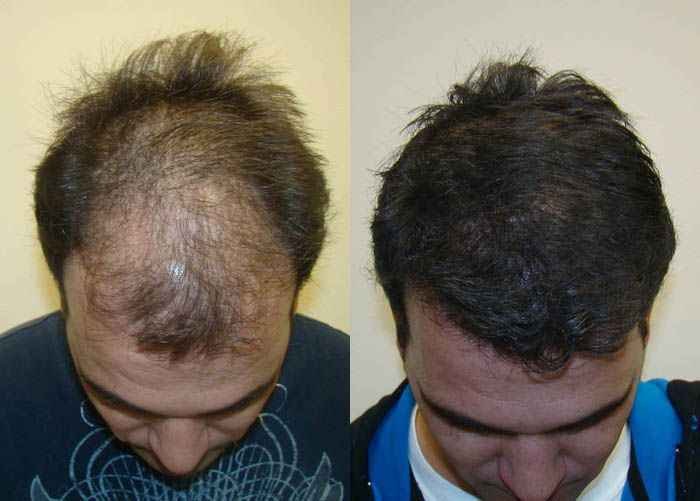
Noticing your hairline sitting a little higher than it used to is one of those things that’s hard to un-see once you’ve spotted it. If you’ve landed here searching “batana oil receding hairline,” you deserve a straight answer, not a sales pitch dressed up as one. So here it is: batana oil can support the hair and scalp you still have at the hairline, but for most men, a receding hairline is a hormonal, genetic process that a topical oil alone won’t stop. Understanding why changes what you should actually expect from it.
What’s Really Causing a Receding Hairline
For the large majority of men, a receding hairline is a sign of androgenetic alopecia, better known as male pattern baldness. It’s driven by dihydrotestosterone (DHT), a hormone derived from testosterone that gradually shrinks genetically sensitive follicles at the temples and crown. Over time, those follicles produce shorter, finer hairs before eventually stopping altogether. This isn’t rare — about a quarter of men see the first signs before age 21, and roughly half will experience some hair loss by 50.
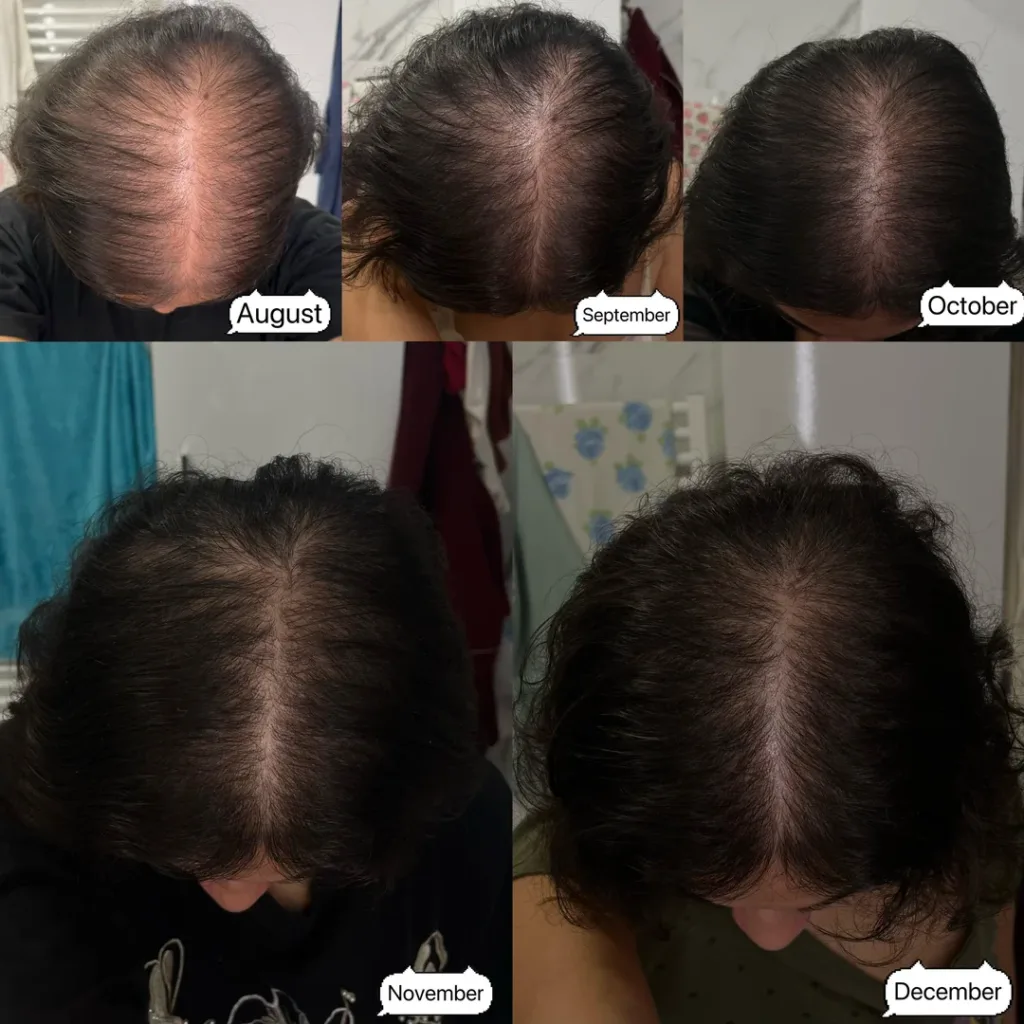
Doctors track this progression using the Hamilton-Norwood scale, which runs from Stage 1 (no recession) to Stage 7 (severe balding). The early, most actionable stages look like this:
- Norwood 2: A slight recession at the temples, often forming a subtle “widow’s peak.” This is considered the earliest clinically meaningful stage, and the point where intervention has the most to work with.
- Norwood 3: Deeper temple recession, sometimes forming a clear M or U shape, and generally the first stage considered “balding” rather than just receding.
- Norwood 3 vertex and beyond: Recession combines with thinning at the crown.
Genetics set the ceiling, but a few things can make a receding hairline look like it’s moving faster than it is:
- Stress-related shedding (telogen effluvium) can temporarily accelerate visible thinning and “unmask” a genetic hairline that was already receding slowly.
- A dry, irritated, or flaky scalp doesn’t cause pattern loss, but it adds visible thinning and breakage on top of it.
- Heat styling and tight hairlines from certain haircuts can cause additional breakage right at the hairline, making the recession look more dramatic than the underlying follicle loss actually is.
What Batana Oil Can Honestly Do Here
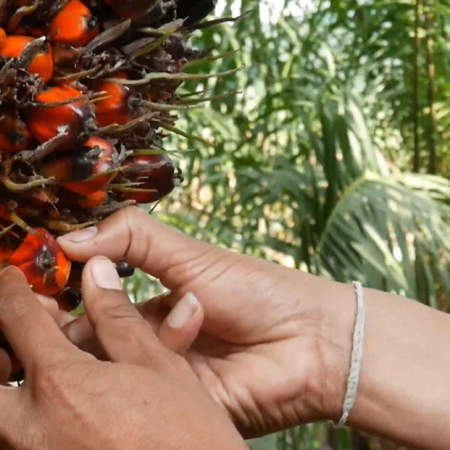
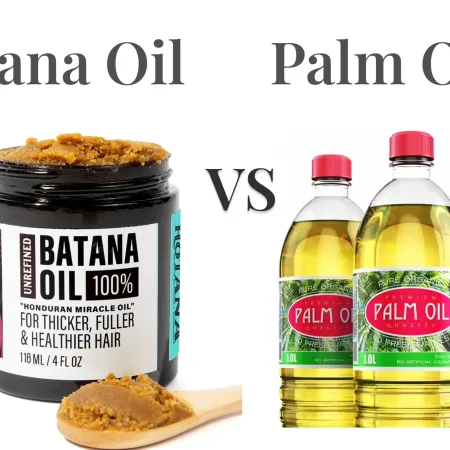
Batana oil is cold-pressed from the nut of Elaeis oleifera, native to Honduras, and it’s rich in oleic acid, linoleic acid, tocopherols (vitamin E), and carotenoids. None of that touches DHT. But it can meaningfully help with the parts of a receding hairline that aren’t purely hormonal:
1. Scalp condition at the hairline. The hairline and temples are thin-skinned, exposed areas that take a lot of environmental and styling stress. Batana oil’s fatty acids help restore the scalp’s lipid barrier, reducing dryness and flaking that can make thinning hair at the hairline look worse than it is.
2. Breakage protection for the hair you still have. Fine, miniaturizing hairs at a receding hairline are more fragile than fully grown strands. Batana oil coats and strengthens the hair shaft, which can reduce breakage and help existing hair hold on to more visible length and volume.
3. Antioxidant support against oxidative stress. Batana oil is notably high in tocopherols, which help neutralize oxidative stress — a factor thought to contribute to follicle aging over time. This won’t reverse miniaturization that’s already underway, but it’s a reasonable supporting input.
4. Circulation, through the massage itself. Massaging oil into the hairline and temples for a few minutes increases local blood flow, which can support nutrient delivery to follicles that are still active.
What Batana Oil Can’t Do
Be honest with yourself about this part, because it’s where a lot of money gets wasted on natural remedies:
- It cannot block DHT. That’s a hormonal mechanism, and only ingredients or medications that interfere with androgen conversion or receptor binding — like finasteride — have solid evidence for that specific job.
- It cannot reverse significant miniaturization or regrow hair in an area that’s been fully bald for years. Once follicles have shrunk past a certain point or stopped producing hair entirely, no topical oil brings them back.
- It won’t stop or meaningfully slow Norwood progression on its own. If your hairline has visibly moved in the last one to two years, that’s active androgenetic alopecia, and batana oil alone is unlikely to be enough to hold the line.
If your recession has been present but stable for years, batana oil is a reasonable, low-risk part of your routine. If it’s actively progressing, it’s worth pairing with something that has real evidence behind it.
What Actually Works Alongside It
For men who want to slow or stabilize a receding hairline rather than just maintain what’s there, the treatments with the strongest evidence are:
- Minoxidil — a topical treatment that prolongs the active growth phase and increases blood flow to the scalp. FDA-approved and widely used for early-to-mid stage recession.
- Finasteride — an oral, prescription medication that blocks the conversion of testosterone to DHT, addressing the root hormonal driver directly. Requires a doctor’s prescription and ongoing use.
- A dermatologist consultation — especially if your hairline has moved noticeably in the past year or two. Early Norwood stages respond best to intervention, and a professional can confirm you’re actually dealing with pattern loss rather than a temporary shedding episode.
Batana oil pairs fine alongside these — there’s no conflict in using both a scalp-conditioning oil and a DHT-targeting treatment — it just shouldn’t be mistaken for a replacement.
How to Use Batana Oil on a Receding Hairline
- Warm a small amount of 100% pure batana oil between your palms until it melts.
- Massage directly into the hairline and temples with your fingertips for 2–3 minutes to support circulation in that specific area.
- Work any remaining oil through the rest of the scalp and hair.
- Leave on for at least 30 minutes, or overnight, then rinse with a sulfate-free shampoo.
- Use 2–3 times per week, consistently, for at least 8–12 weeks before evaluating whether it’s helping.
For the full routine, see our step-by-step application guide.