Most people think Vitamin E is just a nice-to-have antioxidant. Something brands throw on a label to sound natural. But inside the hair shaft? It’s doing repair work that most synthetic ingredients can’t touch.
You’ve probably seen Vitamin E listed on shampoo bottles, serums, and hair masks for years. And honestly, most of the time it’s just there for marketing. The concentration is too low, the form is wrong, or it’s wrapped in so many other chemicals that it never actually reaches the part of your hair that needs it.
Batana oil is different. And not because of clever branding — because of actual chemistry.
Raw, cold-pressed batana oil contains one of the highest naturally occurring concentrations of tocopherols — the scientific name for the Vitamin E family — found in any plant oil. And unlike a lab-formulated serum, those tocopherols arrive alongside oleic acid, linoleic acid, and antioxidant compounds that help them actually penetrate the strand and do their job.
In this article, we’re going to get specific about what Vitamin E in batana oil does inside the hair shaft — not just “it moisturises” or “it adds shine,” but the actual biological repair processes happening at a structural level. Because once you understand how this works, you’ll know exactly why it makes a difference that other oils and treatments simply don’t.
What Is the Hair Shaft, and Why Does It Get Damaged?
Before we get into Vitamin E, it helps to understand what we’re actually talking about when we say “hair shaft damage.” Because a lot of people use that phrase without really knowing what’s broken — and that makes it much harder to fix.
Each strand of hair is made up of three layers:
The medulla — the soft, innermost core (not present in all hair types)
The cortex — the thick middle layer made of keratin protein bundles, responsible for strength, elasticity, and color
The cuticle — the outermost layer of overlapping protective scales, like roof tiles on a house
When people talk about damaged hair, they’re almost always talking about damage to the cuticle and cortex. The cuticle gets lifted, chipped, or stripped away. The cortex gets depleted of proteins and lipids. And once that happens, the strand becomes porous, rough, brittle, and incredibly prone to breakage.
What causes this? The usual suspects — heat styling, bleach and chemical treatments, UV exposure, hard water, over-washing, and mechanical friction from brushing on wet hair. Each of these attacks the hair shaft in a slightly different way, but they all share one thing in common: they generate free radicals and oxidative stress inside the strand.
And that’s exactly where Vitamin E enters the conversation.
What Exactly Are Tocopherols — And Why Does Batana Oil Have So Many?
Tocopherols are a group of fat-soluble compounds that make up what we collectively call Vitamin E. There are eight forms in total — alpha, beta, gamma, and delta tocopherol, plus four tocotrienols — but in the context of hair care, it’s primarily alpha-tocopherol doing the heavy lifting.
What makes batana oil unusual is that it contains tocopherols in their natural, unmodified form at exceptionally high concentrations. This matters because tocopherol activity is extremely sensitive to processing. Heat, oxidation, chemical refining — all of it degrades the tocopherols before the oil ever reaches your hair.
Why Unrefined Matters
Refined oils go through deodorisation, bleaching, and heat processing that can reach temperatures above 200°C. At those temperatures, tocopherols degrade rapidly. Cold-pressed, unrefined batana oil — the kind sourced directly from the Miskito communities of Honduras — skips all of that. The tocopherols arrive at your hair shaft intact and biologically active, which is the only form that actually repairs damage.
The Miskito people never processed their batana oil. They extracted it using traditional cold-press methods and used it raw. That wasn’t a limitation — it was wisdom. They preserved the very compounds that make the oil work, without knowing the chemistry behind why.
How Vitamin E in Batana Oil Repairs Hair Shaft Damage
This is the section most hair care content skips over, because it requires getting specific. Let’s not skip it.
1. It Neutralises Free Radicals Inside the Strand
Free radicals are unstable molecules that attack and degrade the proteins and lipids inside your hair. They’re generated every time you use a blow dryer, sit in the sun, swim in chlorinated water, or expose your hair to pollution. They’re also a byproduct of chemical processing — bleach and colour treatments flood the hair shaft with free radicals.
Left unchecked, free radicals break down keratin proteins in the cortex and oxidise the lipids in the cuticle. This is what makes chemically treated hair feel rough and brittle, and why heat-damaged hair loses its elasticity over time — it’s literally being degraded from the inside.
Alpha-tocopherol is a powerful free radical scavenger. It donates an electron to the unstable free radical molecule, neutralising it before it can attack the hair’s structural proteins. Think of it as intercepting the damage before it compounds. Regular application of Vitamin E in batana oil essentially provides the hair shaft with ongoing antioxidant protection — slowing the rate of structural degradation significantly.
2. It Repairs Oxidised Lipids in the Cuticle Layer
The hair cuticle is protected by a thin lipid layer on its outermost surface — primarily 18-methyleicosanoic acid (18-MEA). This fatty acid layer is what gives healthy hair its smoothness, its water-resistance, and its ability to reflect light as shine. It’s also one of the first things that bleach and heat styling strip away.
When the lipid layer is damaged, the cuticle scales lift and separate. Hair becomes rough, porous, and feels like velcro when two strands rub together. Colour fades faster. Moisture escapes within hours of washing. Tangles and breakage become constant.
Tocopherols in batana oil work alongside the oil’s linoleic and oleic acids to restore this lipid layer. The tocopherols protect the fatty acids from further oxidation while the oleic acid fills the gaps between cuticle scales — effectively re-smoothing the surface and restoring the protective barrier that was stripped away.
3. It Prevents Protein Degradation in the Cortex
The cortex is held together by keratin protein chains linked by disulphide bonds. These bonds give hair its tensile strength — its resistance to snapping under tension. Chemical treatments like relaxers and perms work by breaking these bonds and reforming them in a different configuration. The problem is, this process is never perfectly controlled, and some bonds are destroyed permanently rather than reformed.
Over time, cortex protein loss is cumulative. Each chemical treatment, each heat session, each bout of UV exposure removes a little more. The hair becomes progressively more fragile.
Vitamin E in batana oil reduces the rate at which this happens by neutralising the oxidative agents that attack the disulphide bonds. It doesn’t rebuild broken bonds — that’s not something a topical oil can do — but it creates a protective environment inside the cortex that slows further degradation. For hair that’s already been chemically treated, this is enormously valuable. You can’t undo what’s done, but you can stop making it worse while new growth comes in healthier.
4. It Supports Scalp Health for Better-Quality Growth
Hair shaft health ultimately starts at the scalp. Follicles that are inflamed, oxidatively stressed, or sitting in a compromised lipid environment produce weaker, thinner strands from the very beginning. There’s no amount of topical treatment that fully compensates for a strand that grew weak from the start.
Vitamin E in batana oil applied to the scalp helps reduce scalp inflammation, neutralise oxidative stress around the follicle, and maintain the lipid barrier of the scalp skin. This creates an environment where follicles can produce stronger, better-formed strands from day one — which means the hair you’re growing right now will be healthier than what came before it.
Vitamin E in Batana Oil vs. Synthetic Vitamin E Supplements
This comes up a lot: why use batana oil when you can just buy a Vitamin E capsule and pierce it onto your hair? It’s a fair question. Here’s why it’s not the same thing.
Factor
Vitamin E in Raw Batana Oil
Synthetic Vitamin E (dl-alpha-tocopherol)
Form
✓ Natural d-alpha-tocopherol (more bioactive)
✗ Synthetic dl-alpha (lower biological activity)
Carrier compounds
✓ Oleic acid helps it penetrate the shaft
✗ Usually suspended in soybean or sunflower oil — heavier, less penetrative
Synergistic compounds
✓ Linoleic acid, antioxidants — work together
✗ Isolated — no synergistic action
Oxidative stability
✓ Naturally stable in cold-pressed oil matrix
✗ Degrades faster when exposed to air and light
Scalp absorption
✓ Light texture, absorbs readily
✗ Often heavy and sits on surface
The short version: synthetic Vitamin E is an isolated molecule. The Vitamin E in batana oil is embedded in a natural matrix that helps it actually work the way it’s supposed to. The whole is greater than the parts — and that’s not a marketing line, it’s how plant chemistry functions.
Who Needs Vitamin E Hair Repair the Most?
While everyone benefits from antioxidant protection, certain hair situations make the Vitamin E in batana oil particularly important.
Bleached or highlighted hair — Bleach creates massive oxidative damage inside the cortex. This is the hair type that responds most dramatically to consistent batana oil use.
Relaxed or permed hair — Chemical bond-breaking treatments leave the cortex vulnerable. Tocopherols help slow continued degradation between treatments.
Sun-exposed hair — UV radiation is one of the most aggressive sources of hair oxidation. The antioxidant protection of Vitamin E is especially useful for people who spend significant time outdoors.
Aging hair — As we get older, the hair’s natural antioxidant capacity decreases and scalp lipid production slows. Batana oil compensates for both.
Postpartum hair — Hormonal shifts during and after pregnancy cause significant oxidative stress on hair follicles. New growth is often weaker as a result — batana oil supports the scalp environment for better regrowth quality.
How to Use Batana Oil to Maximise Vitamin E Absorption
Getting the most from the Vitamin E in batana oil is partly about technique. Because tocopherols are fat-soluble and work inside the hair shaft, you want to give them the best possible chance of penetrating — not just sitting on the surface.
The Heat-Assisted Deep Treatment
Apply a generous amount of melted batana oil to dry or slightly damp hair from scalp to ends. Cover with a plastic shower cap, then wrap a warm towel around your head for 20–30 minutes. The gentle warmth slightly opens the cuticle scales and increases permeability, allowing the tocopherols and fatty acids to penetrate more deeply into the cortex. This is especially effective for high-porosity or chemically treated hair.
The Overnight Scalp Treatment
For scalp-focused Vitamin E delivery — targeting follicle health and new growth quality — massage batana oil directly into the scalp using circular motions for 3–5 minutes before bed. Use a silk pillowcase or bonnet overnight. The extended contact time allows maximum tocopherol absorption into the scalp skin and follicle environment. Wash out in the morning with a sulphate-free shampoo.
The Protective Pre-Styling Application
Before using heat tools, apply a very small amount of batana oil (pea-sized, melted between palms) through mid-lengths and ends. The tocopherols create an antioxidant barrier that partially buffers the free radical damage from heat. It won’t replace a heat protectant for mechanical protection, but it significantly reduces the oxidative damage that heat styling causes inside the strand.
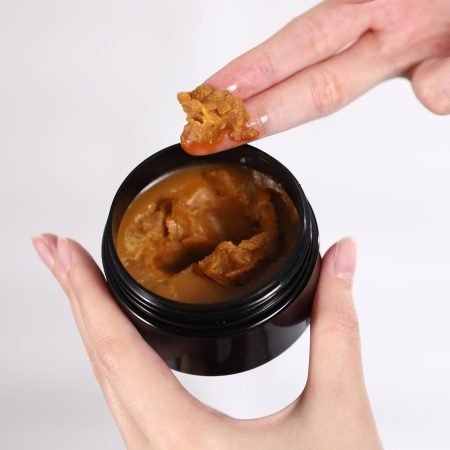
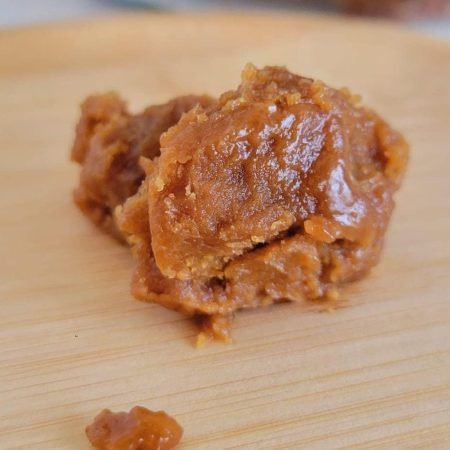
Important Reminder: Raw batana oil is solid at room temperature. Always melt it between your palms before applying — never microwave it. Heat above 40–50°C begins to degrade the tocopherols. Your body heat is the right temperature. This is why the Miskito people have always applied it by hand — it’s not just tradition, it’s the correct method for preserving the oil’s active compounds.
What Results to Expect — and When
Vitamin E is a repairing and protecting compound. It doesn’t coat the strand like a conditioner — it works structurally. Which means results build gradually rather than appearing overnight. Here’s an honest timeline.
Week 1–2: Surface Changes
Cuticle smoothing begins. Hair feels softer, tangles less, and starts to show more shine. The lipid layer on the cuticle surface is being partially restored.
Week 3–4: Structural Improvement
Less breakage during washing and combing. Hair feels more resilient when wet. The cortex is responding to continued Vitamin E and fatty acid delivery.
Week 6–8: Visible Repair
Split end formation slows noticeably. Hair holds moisture better throughout the day. The antioxidant protection is reducing ongoing free radical damage.
Month 3+: New Growth Quality
Scalp health improvement becomes visible in the new growth — strands coming in stronger, with more natural lustre. This is the compounding effect of consistent Vitamin E delivery to the follicle environment.
Frequently Asked Questions
Can Vitamin E in batana oil actually reverse hair damage?
It can repair and partially reverse oxidative damage — the kind caused by free radicals from heat, UV, and chemical processing. It cannot reverse mechanical damage like permanently broken protein bonds from over-bleaching. Think of it as restoring what can be restored, and protecting what remains. For severely damaged hair, the most meaningful improvement comes in the new growth quality over time.
How is Vitamin E in batana oil different from other Vitamin E-rich oils like sunflower or wheat germ oil?
Sunflower and wheat germ oils do contain tocopherols, but batana oil’s unique fatty acid profile — particularly its oleic acid ratio — makes it significantly more penetrative into the hair shaft. The tocopherols don’t just sit on the surface; they’re carried into the cortex by the oleic acid. That’s the key difference in results.
Can I use batana oil if I plan to colour my hair?
Yes, but avoid applying it within 24–48 hours before colouring. A thin oil coating on the hair shaft can create a barrier that affects colour uptake. After colouring, however, batana oil is excellent for repairing the oxidative damage the bleach or dye caused — start using it again from the day after your colour appointment.
How often should I use batana oil for hair shaft repair?
For actively damaged hair, two to three times per week gives the best results. Once hair has stabilised and you’re in a maintenance phase, once a week is usually sufficient. Consistency matters far more than frequency — irregular use at high frequency is less effective than steady, moderate use over several months.
Is batana oil safe to use on children’s hair?
Yes. Raw batana oil contains no synthetic chemicals, fragrances, or preservatives — it’s just cold-pressed palm nut oil. It is safe for all ages. Many Miskito families use it on children from infancy. Use a smaller amount proportional to hair length and thickness.